Study in Boston
Table of Contents
- Why Study in Boston?
- Top Universities in Boston
- Popular Courses to Study in Boston
- Eligibility and Admission Requirements to Study in Boston
- Cost of Studying in Boston
- Best Places to Live in Boston for Students
- Scholarships to Study in Boston
- Student Visa Requirements to Study in Boston
- Career Opportunities After Studying in Boston
- Final Thoughts from the Author
Boston has earned a reputation as one of the world's leading student cities, attracting learners from across the globe with its academic excellence and career opportunities. If you're planning to study in Boston, you'll have access to prestigious universities such as Harvard University, Massachusetts Institute of Technology (MIT), and Boston University, along with more than 50 higher education institutions across the city.
Beyond academics, Boston offers a thriving research ecosystem, strong industry connections, and a diverse student community of over 200,000 learners. Whether you're interested in STEM, business, healthcare, or the arts, studying in Boston can open doors to global careers and valuable professional networks.
Key Highlights table for the Study in Boston:
Key Highlights | Details |
Top Universities | Harvard University, Massachusetts Institute of Technology (MIT), Boston University, Northeastern University, Tufts University |
Number of Universities | 50+ colleges and universities |
Popular Courses | Computer Science, Engineering, Business, Data Science, Medicine, Public Health, Finance |
Programme Duration | Bachelor's: 4 years; Master's: 1–2 years; MBA: 1–2 years |
Language of Instruction | English |
Average Annual Tuition Fees | USD 25,000–70,000 (Approx. ₹21.5L–₹60L), depending on the university and programme |
Average Cost of Living | USD 2,200–3,500 per month (Approx. ₹1.9L–₹3L), including accommodation |
Student Visa | F-1 Student Visa |
Part-Time Work | Up to 20 hours per week during academic sessions and full-time during scheduled breaks |
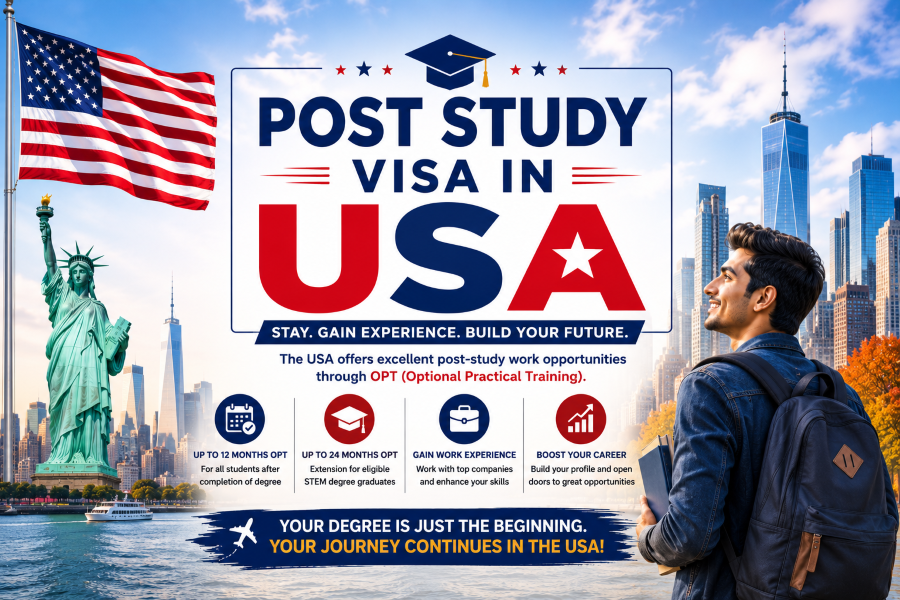
Post-Study Work | Up to 12 months through OPT; eligible STEM graduates can receive a 24-month OPT extension |
Top Recruiters | Google, Microsoft, Amazon, Deloitte, Bain & Company, Moderna, Biogen, Pfizer, Fidelity Investments |
Average Graduate Salary | USD 80,000–120,000 per year (Approx. ₹68L–₹1.03Cr), depending on the role and industry |
Best Intakes | Fall (August/September), Spring (January) |
Why Study in Boston?
Boston has long been regarded as one of the world's leading education hubs, attracting students from over 150 countries each year. Home to globally recognised universities of USA, a thriving innovation ecosystem, and strong employer connections, the city offers much more than a classroom experience. Whether you're interested in engineering, business, healthcare, or data science, study in Boston gives you access to academic excellence, practical learning, and outstanding career opportunities.
Top Reasons to Study in Boston
Choosing Boston means becoming part of a city where education, research, and industry work closely together. Here are some of the biggest advantages that continue to attract international students.
1. Learn at World-Class Universities:
Boston is home to some of the world's most respected universities, including Harvard University, Massachusetts Institute of Technology (MIT), Boston University, Northeastern University, and Tufts University. These institutions are recognised for their research, academic quality, and strong global reputation.
2. Strong Career Opportunities
Boston is one of the largest employment hubs in the United States for technology, healthcare, biotechnology, finance, and consulting. Global companies regularly recruit graduates from Boston universities through internships, career fairs, and campus hiring programmes, giving students valuable industry exposure even before graduation.
3. Excellent Research and Innovation Environment
Often called the innovation capital of the United States, Boston invests heavily in research across engineering, medicine, artificial intelligence, robotics, and life sciences. Universities collaborate with hospitals, research centres, and multinational companies, allowing students to work on real-world projects alongside leading researchers.
4. Diverse Student Community
Students from around the world choose to study in Boston, creating a multicultural learning environment. This diversity helps students build international networks, develop cross-cultural skills, and gain exposure to different perspectives both inside and outside the classroom.
5. Access to Internships and Practical Learning
Many universities in Boston incorporate internships, co-op programmes, research assistantships, and industry projects into their curriculum. These opportunities help students gain practical experience, strengthen their resumes, and improve their employment prospects after graduation.
6. High Quality of Life
Despite being a busy metropolitan city, Boston offers a safe, student-friendly environment with excellent public transport, libraries, museums, parks, and cultural attractions. Its compact layout makes it easy for students to travel between universities, internships, and city neighbourhoods.
Also check out: Why Study in USA
Top Universities in Boston
Boston is home to some of the world's most prestigious universities, attracting students from across the globe for their academic excellence, research opportunities, and industry connections. Whether you're looking for STEM, business, medicine, or liberal arts programmes, the city offers institutions that cater to a wide range of academic interests and career goals.
H3: Best Universities to Study in Boston
Each university in Boston has its own strengths, from cutting-edge research and innovation to strong graduate employability. The table below highlights some of the city's leading universities and their popular areas of study.
University | Popular Courses | Why Choose It? |
Massachusetts Institute of Technology (MIT) | Computer Science, Engineering, Artificial Intelligence, Data Science, Economics | Globally recognised for research, innovation, and entrepreneurship, with strong industry collaborations. |
Harvard University | Business, Law, Medicine, Public Policy, Education, Life Sciences | Offers world-class teaching, extensive research opportunities, and one of the strongest global alumni networks. |
Boston University | Business, Engineering, Communication, Public Health, Computer Science | Known for career-focused programmes, global research, and a diverse international student community. |
Northeastern University | Computer Science, Business Analytics, Engineering, Cybersecurity, Data Science | Famous for its co-op programme, allowing students to gain paid work experience while studying. |
Tufts University | International Relations, Biomedical Engineering, Medicine, Economics, Political Science | Combines strong academics with interdisciplinary learning and research opportunities. |
Boston College | Finance, Management, Economics, Law, Education | Well known for business education, liberal arts programmes, and excellent graduate employment outcomes. |
Suffolk University | Business, Accounting, Law, Marketing, Public Administration | Offers practical learning with strong links to Boston's financial and legal sectors. |
Popular Courses to Study in Boston
Boston offers programmes across almost every discipline, but it is especially known for its strengths in technology, business, healthcare, engineering, and life sciences. With leading universities and close ties to major employers, students benefit from a curriculum that combines academic learning with practical industry exposure.
Most Popular Courses in Boston
The city's universities offer hundreds of undergraduate and postgraduate programmes. However, the following fields consistently attract the highest number of international students because of their academic reputation and strong career prospects.
Course | Why Choose It? |
Computer Science & Artificial Intelligence | Boston is a global hub for AI, software development, robotics, and innovation, offering excellent research and career opportunities. |
Business & MBA | Students benefit from strong industry links, networking opportunities, and access to leading employers in finance, consulting, and entrepreneurship. |
Engineering | Mechanical, Electrical, Civil, Biomedical, and Chemical Engineering programmes combine classroom learning with cutting-edge research and practical projects. |
Data Science & Analytics | Growing demand for data professionals makes Boston an attractive destination for students interested in machine learning, analytics, and big data. |
Medicine & Public Health | Boston is home to some of the world's leading hospitals and medical research institutions, providing outstanding learning and research opportunities. |
Biotechnology & Life Sciences | The city's thriving biotech ecosystem offers students exposure to advanced research and industry collaborations. |
Finance & Economics | Boston's strong financial sector creates excellent internship and graduate employment opportunities for finance and economics students. |
Law & Public Policy | Students gain access to experienced faculty, research centres, and opportunities to engage with public institutions and legal organisations. |
Also check: List of Exams Required to Study in USA in 2026
Eligibility and Admission Requirements to Study in Boston
Admission requirements vary across universities and programmes, but most institutions in Boston follow a similar evaluation process. Universities look beyond academic scores and assess your English proficiency, supporting documents, and overall profile to determine whether you're a good fit for the programme.
Academic Requirements
Your academic qualifications are the first step in the admission process. The exact eligibility criteria depend on whether you're applying for an undergraduate or postgraduate programme.
Study Level | Minimum Academic Requirement |
Bachelor's Degree | Completion of Class 12 or an equivalent qualification from a recognised board. |
Master's Degree | A bachelor's degree from a recognised university in a relevant field. Some programmes may also require prerequisite subjects. |
MBA | A bachelor's degree is mandatory. Many universities also prefer 2–5 years of professional work experience, although requirements vary by institution. |
PhD | A relevant master's degree, research proposal (where applicable), and academic references. |
English Language Requirements
Since English is the primary language of instruction, international students must demonstrate language proficiency unless they qualify for a waiver.
Test | Typical Minimum Requirement* |
IELTS Academic | 6.5–7.5 |
TOEFL iBT | 80–100 |
PTE Academic | 58–70 |
Duolingo English Test | Accepted by many universities; score requirements vary. |
*Minimum scores vary by university and programme.
Standardised Test Requirements
Some programmes may ask for additional test scores, although many universities have adopted test-optional or test-flexible policies in recent years.
Programme | Common Requirement |
MBA | GMAT or GRE may be required or recommended by some business schools. |
Master's Programmes | GRE may be required for selected STEM or research-focused programmes. |
Bachelor's Programmes | SAT or ACT requirements depend on the university's admission policy. |
Documents Required for Admission
Preparing your application well in advance can improve your chances of admission. While document requirements differ slightly between universities, most applicants are asked to submit the following:
Completed online application form
Academic transcripts and certificates
Valid passport
Statement of Purpose (SOP)
Letters of Recommendation (LORs)
English language test scores
Resume or CV (mainly for postgraduate programmes)
GMAT/GRE scores, if required
Portfolio for design, architecture, or creative programmes
Application fee (where applicable)
Application Timeline
Most universities in Boston have multiple admission cycles, but deadlines vary by institution and programme. Applying early gives you enough time to arrange your visa, scholarships, accommodation, and financial documents.
Intake | Typical Start |
Fall Intake | August–September |
Spring Intake | January |
Summer Intake | Available for selected programmes only |
Tip: Always check the official admissions page of your chosen university for the latest eligibility requirements and application deadlines, as they can vary by programme and academic year.
Must check: List of Requirements to Study in USA
Cost of Studying in Boston
Planning your budget is an important part of studying abroad. The total cost of studying in Boston includes tuition fees, accommodation, daily living expenses, health insurance, and other personal costs. While Boston is one of the more expensive student cities in the United States, careful financial planning and scholarships can help manage your overall expenses.
Tuition Fees at Boston Universities
Tuition fees vary depending on the university, programme, and level of study. Public universities generally have lower fees than private institutions, while specialised programmes such as MBA and Medicine are often more expensive.
University | Average Annual Tuition Fee (USD)* | Approx. INR* |
Harvard University | USD 59,000–61,000 | ₹50.5L–52.2L |
Massachusetts Institute of Technology (MIT) | USD 62,000–64,000 | ₹53L–54.7L |
Boston University | USD 68,000–70,000 | ₹58L–60L |
Northeastern University | USD 64,000–66,000 | ₹54.7L–56.4L |
Tufts University | USD 67,000–69,000 | ₹57.3L–59L |
*Tuition fees vary by programme and academic year. Always check the university's official website for the latest fee structure.
Cost of Living in Boston
Apart from tuition, you'll need to budget for accommodation, food, transport, health insurance, study materials, and personal expenses. According to Numbeo, Boston has one of the highest living costs in the United States, making financial planning essential before you begin your studies.
Expense | Average Monthly Cost (USD) | Approx. INR |
Accommodation | 1,300–2,000 | ₹1.1L–1.7L |
Food & Groceries | 350–600 | ₹30K–51K |
Local Transport | 90–120 | ₹7.7K–10.3K |
Utilities & Internet | 180–280 | ₹15K–24K |
Personal Expenses | 250–500 | ₹21K–43K |
Estimated Total | 2,170–3,500 | ₹1.85L–3L |
Note: Living costs depend on your lifestyle and accommodation choice. Sharing an apartment or living in university housing can significantly reduce monthly expenses.
Best Places to Live in Boston for Students
Choosing the right neighbourhood can make a big difference to your study experience in Boston. While some areas are closer to universities, others offer more affordable rent or better access to public transport. The best choice depends on your budget, university location, and lifestyle.
Popular Student Neighbourhoods in Boston
Boston has several student-friendly neighbourhoods that offer easy access to universities, restaurants, grocery stores, and public transport. Here's a comparison of some of the most popular options.
You can merge the rent columns like this:
Area | Best For | Average Monthly Rent |
Allston | Budget-friendly housing, large student community | USD 1,300–1,900 (Approx. ₹1.1L–₹1.6L) |
Brighton | Affordable apartments and quieter residential areas | USD 1,400–2,000 (Approx. ₹1.2L–₹1.7L) |
Fenway–Kenmore | Students studying at nearby universities | USD 1,700–2,500 (Approx. ₹1.45L–₹2.1L) |
Cambridge | Close to Harvard University and MIT | USD 2,000–3,200 (Approx. ₹1.7L–₹2.7L) |
Brookline | Safe neighbourhood with excellent public transport | USD 1,800–2,700 (Approx. ₹1.5L–₹2.3L) |
*Average rents vary depending on apartment type, location, and lease duration.
Scholarships to Study in Boston
Studying in Boston can be a significant investment, but there are several scholarships and financial aid options available to help reduce the overall cost. Along with university-specific funding, students can also explore a wide range of scholarships to study in USA offered by government agencies, private organisations, and international foundations.
These awards are typically based on academic merit, financial need, leadership potential, or research achievements, helping make higher education in Boston more affordable.
University Scholarships
Most universities in Boston offer scholarships specifically for international students. The eligibility criteria, award amount, and application process vary by institution, so it's important to review the official scholarship page before applying.
University | Scholarship | Coverage |
Harvard University | Harvard Financial Aid | Need-based funding that may cover a significant portion of tuition and living expenses for eligible students. |
Massachusetts Institute of Technology (MIT) | MIT Scholarships | Need-based financial aid available to eligible undergraduate students, including international applicants. |
Boston University | Trustee Scholarship, Presidential Scholarship | Merit-based awards offering partial to full tuition for outstanding students. |
Northeastern University | International Scholars Program | Merit scholarships awarded to high-achieving international students. |
Tufts University | Tufts Financial Aid & Merit Awards | Selected merit and need-based funding opportunities for eligible applicants. |
Note: Scholarship availability differs by programme and degree level. Some awards require a separate application, while others automatically consider eligible applicants during the admission process.
Government and External Scholarships
Apart from university funding, international students can also apply for scholarships offered by government agencies and international organisations. These awards may cover tuition fees, living expenses, research costs, or a combination of all three.
Scholarship | Offered By | Coverage |
Fulbright Foreign Student Program | U.S. Government | Tuition fees, living expenses, health insurance, and travel support for eligible students. |
Inlaks Shivdasani Foundation Scholarship | Inlaks Foundation | Funding for exceptional Indian students pursuing higher education abroad. |
JN Tata Endowment Loan Scholarship | JN Tata Endowment | Loan scholarship to support postgraduate studies overseas. |
AAUW International Fellowships | American Association of University Women | Financial support for eligible women pursuing graduate and postgraduate studies in the United States. |
Also check: Fully Funded Masters Scholarships in USA for Indian Students in 2026
Student Visa Requirements to Study in Boston
International students planning to study in Boston must apply for an F-1 Student Visa, the most common visa for full-time academic programmes in the United States. Before applying, you'll need an admission offer from a Student and Exchange Visitor Program (SEVP)-approved institution and a valid Form I-20 issued by your university.
How Does the Student Visa Process Work?
The U.S. student visa process begins after you receive your university admission. Once your institution issues the Form I-20, you can pay the required fees, complete the visa application, and schedule your interview at the nearest U.S. Embassy or Consulate.
The typical process includes:
Receive your admission letter from a SEVP-approved university.
Obtain your Form I-20 from the university.
Pay the SEVIS I-901 fee.
Complete the DS-160 online visa application form.
Pay the visa application fee.
Schedule and attend your visa interview.
Receive your F-1 visa and prepare for travel.
Eligibility Requirements
Before applying for an F-1 Student Visa, you must meet the eligibility requirements set by the U.S. government. Along with university admission, you'll also need to demonstrate your financial ability and your intention to study full-time.
To qualify, you generally need:
Admission to a SEVP-approved U.S. university
A valid Form I-20
Proof of sufficient financial resources
A valid passport
Strong academic records
Intent to return to your home country after completing your studies
Documents Required for an F-1 Student Visa
Preparing your documents in advance can make the visa process much smoother. Although additional documents may be requested during your interview, these are the standard requirements.
Valid passport
Form I-20 issued by your university
DS-160 confirmation page
Visa appointment confirmation
SEVIS I-901 fee payment receipt
Visa application fee payment receipt
Recent passport-size photograph
University admission letter
Academic transcripts and certificates
English language test scores (if applicable)
Proof of financial support (bank statements, education loan approval, scholarship letters, sponsor documents)
Student Visa Fees
Before attending your visa interview, you'll need to pay both the visa application fee and the SEVIS fee.
Fee | Amount | Approx. INR* |
F-1 Visa Application Fee | USD 185 | ₹15,800 |
SEVIS I-901 Fee | USD 350 | ₹30,000 |
*Approximate INR values may vary depending on the exchange rate.
Career Opportunities After Studying in Boston
Boston is one of the strongest job markets in the United States, particularly for graduates in technology, healthcare, finance, biotechnology, consulting, and engineering. The city's universities maintain close relationships with employers, making internships, networking events, and campus recruitment an important part of the student experience.
Top Industries Hiring Graduates
Boston's economy is driven by innovation and research, creating opportunities across a wide range of industries. International graduates often find employment in sectors that value specialised skills and advanced qualifications.
Industry | Popular Job Roles |
Technology | Software Engineer, Data Scientist, AI Engineer, Cybersecurity Analyst |
Healthcare & Life Sciences | Clinical Research Associate, Healthcare Consultant, Biomedical Scientist |
Biotechnology | Research Scientist, Laboratory Analyst, Biotech Engineer |
Finance | Financial Analyst, Investment Banking Analyst, Risk Analyst |
Consulting | Business Consultant, Strategy Consultant, Management Consultant |
Engineering | Mechanical Engineer, Civil Engineer, Electrical Engineer, Robotics Engineer |
Top Recruiters in Boston
Many global companies have offices or headquarters in Boston and actively recruit graduates from local universities. Career fairs, internship programmes, and university partnerships make it easier for students to connect with these employers.
Company | Industry |
Technology | |
Amazon | Technology & Cloud Computing |
Microsoft | Software & AI |
Moderna | Biotechnology |
Pfizer | Pharmaceuticals |
Biogen | Biotechnology |
Deloitte | Consulting |
PwC | Consulting & Advisory |
EY | Professional Services |
Bain & Company | Management Consulting |
Fidelity Investments | Financial Services |
Liberty Mutual | Insurance & Finance |
Average Salaries in Boston
Salaries vary depending on your industry, qualifications, and work experience. According to Glassdoor, graduates in technology, consulting, healthcare, and finance often receive competitive starting salaries compared with many other U.S. cities.
Job Role | Average Annual Salary (USD)* | Approx. INR* |
Software Engineer | 110,000–145,000 | ₹94L–1.24Cr |
Data Scientist | 105,000–140,000 | ₹90L–1.20Cr |
Financial Analyst | 80,000–105,000 | ₹68L–90L |
Business Analyst | 85,000–110,000 | ₹73L–94L |
Mechanical Engineer | 85,000–110,000 | ₹73L–94L |
Biomedical Engineer | 90,000–120,000 | ₹77L–1.03Cr |
*Approximate figures based on Glassdoor salary estimates and may vary by employer, experience, and location.
Optional Practical Training (OPT)
International students on an F-1 visa can gain work experience in the United States through Optional Practical Training (OPT) after completing their studies. Standard OPT allows eligible students to work for up to 12 months in a job related to their field of study. Graduates from eligible STEM programmes may also qualify for a 24-month STEM OPT extension, allowing them to work in the U.S. for up to 36 months in total.
Tip: Start building your professional network early by attending career fairs, joining student organisations, connecting with alumni, and applying for internships during your studies. These experiences can significantly improve your chances of securing a full-time job after graduation.
Final Thoughts from the Author
Studying in Boston isn't just about earning a degree from a well-known university. It's about being part of a city where learning extends beyond the classroom. From research labs and startup hubs to internships and networking events, you'll find opportunities to grow both academically and professionally.
My advice is to look beyond university rankings when making your decision. Compare the course structure, internship opportunities, tuition fees, living costs, and the kind of career support each university offers. A programme that aligns with your goals will always be a better choice than simply choosing the highest-ranked institution. With the right planning, studying in Boston can be an investment that benefits you long after graduation.
Need help with your study abroad plan? Book a free counseling session with our experts today.