Program · 17 Jul 2026
Masters in USA for Indian Students 2026
A Masters in USA is one of the most popular choices for Indian students seeking globally recognised qualifications, adv...
Read More
Free consultation — no commitment required.
Expert support to help you choose the right programs and universities.

Admission Rate
98%
Across all destinations
Avg. Cost Savings
₹20L*
vs. self-managed admissions
300+
Partner Universities
50+
Destinations Covered
98%
Admission Rate
₹20L*
Avg. Cost Savings
*vs. self-managed admissions
Top Universities, Post Study Work Visa, Jobs
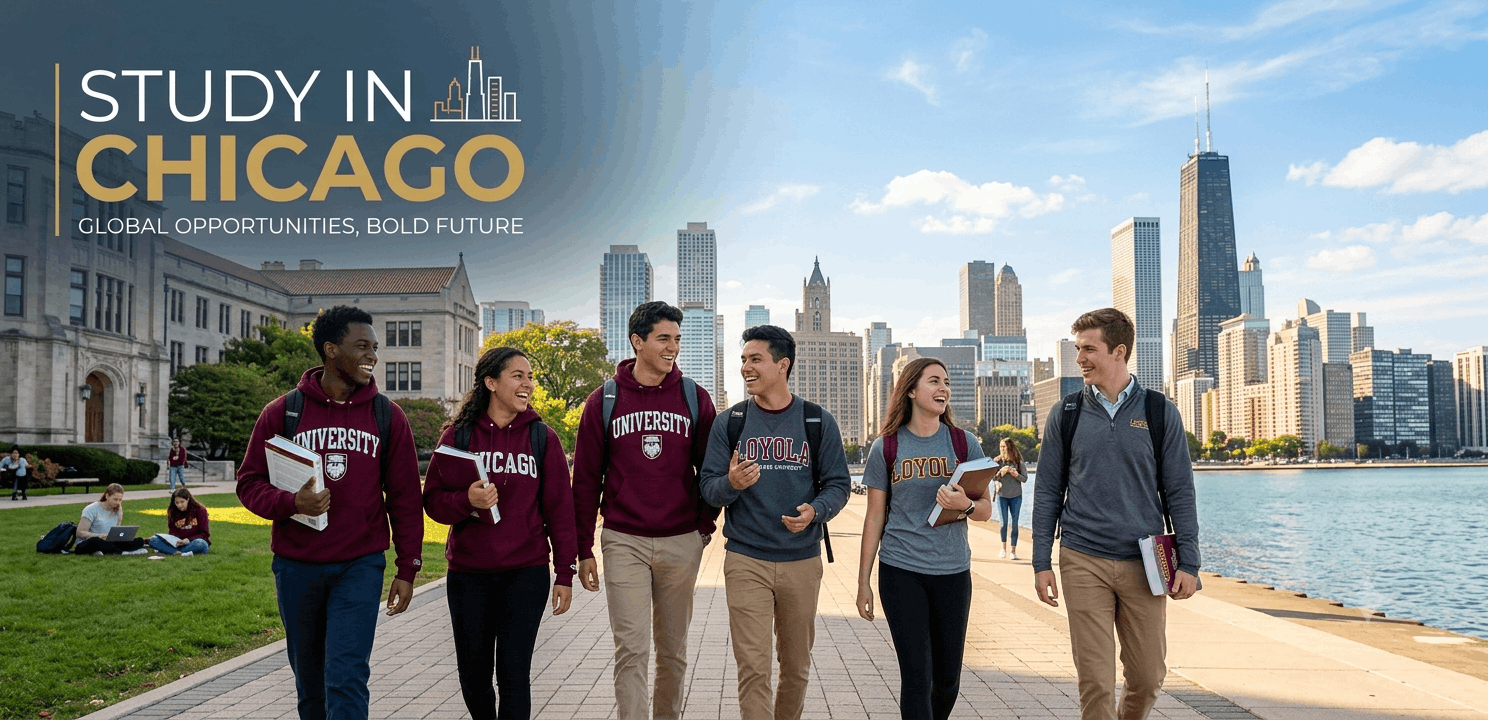
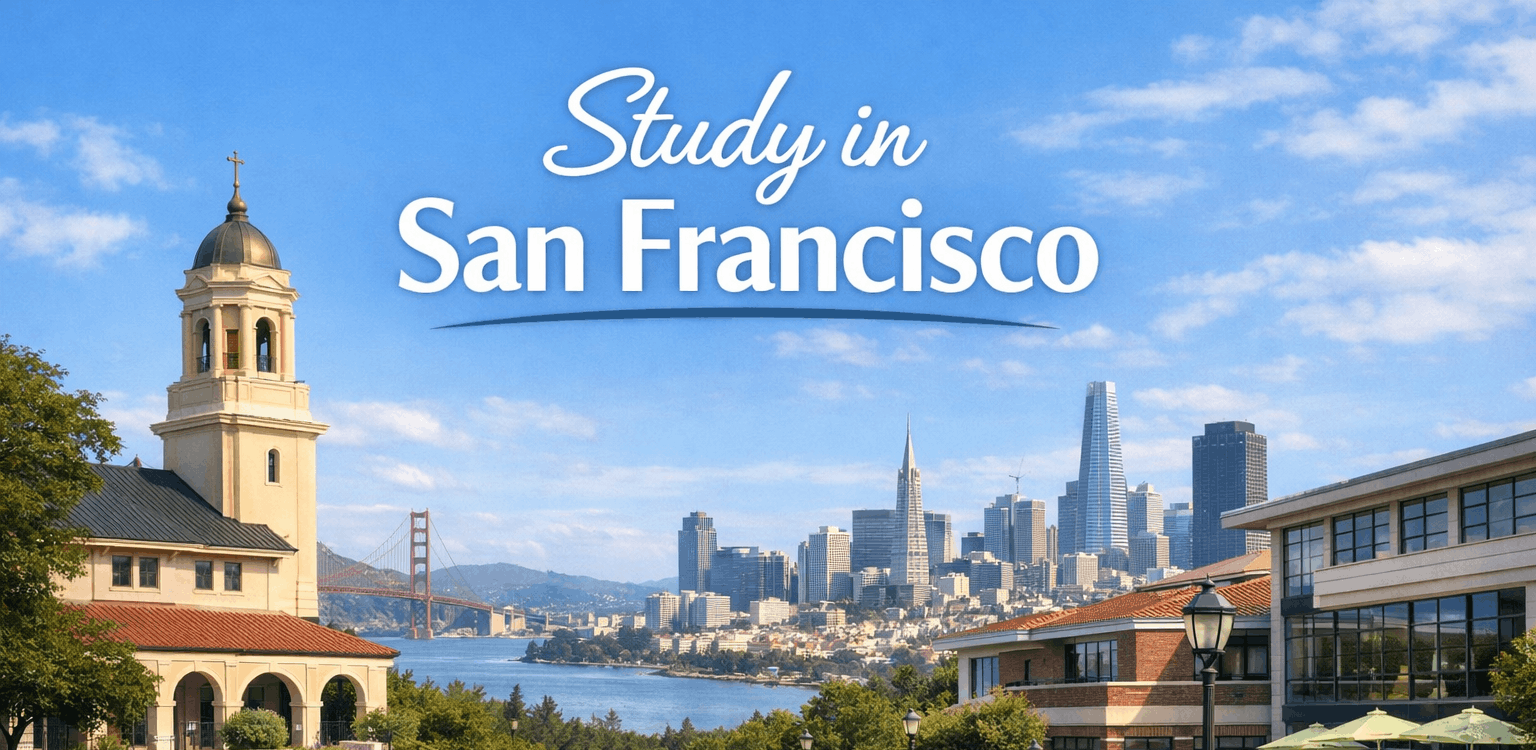
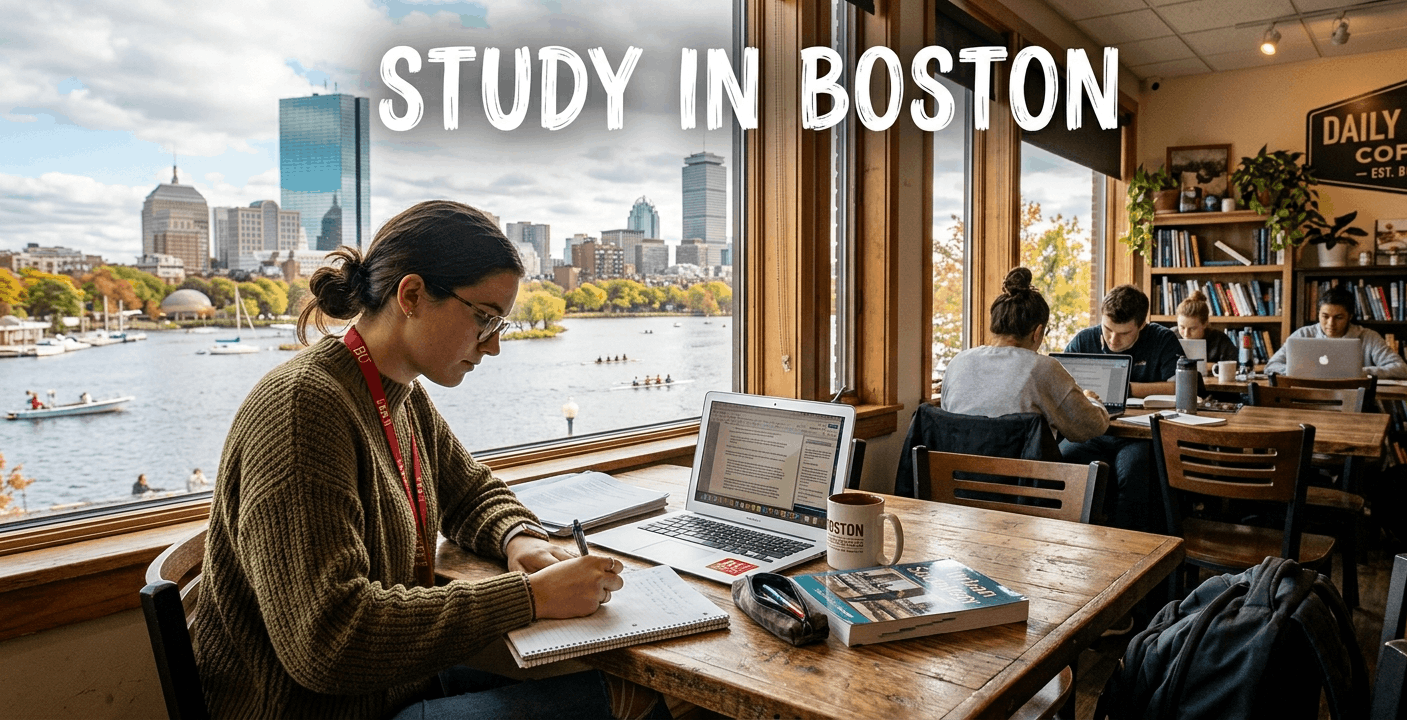
Study in USA
Explore leading US cities with globally recognized programs
Program · 17 Jul 2026
A Masters in USA is one of the most popular choices for Indian students seeking globally recognised qualifications, adv...
Read MoreLearn through programs focused on practical skills and long-term growth.
A flexible, cost-efficient route to a globally recognized US degree.
Follow these simple steps to start your study abroad journey
Choose the best universities and programs based on your goals.
Prepare and complete required standardized tests.
Submit your application to selected universities.
Complete visa process and prepare for departure.
Everything you need to know before you begin your study abroad journey
Yes, if you choose the right course and university. The USA offers higher salary potential, global exposure, and access to top employers, which can justify the initial investment over time.
It’s possible. Universities consider your overall profile, including SOP, test scores, and work experience. A strong application can compensate for a slightly lower GPA.
Yes, several public universities offer lower tuition and good ROI. States like Texas, Arizona, and Illinois have universities that balance cost and job opportunities well.
Work experience is not mandatory for most programs but adds value, especially for competitive courses. It helps strengthen your application and improves job prospects after graduation.
You can stay through OPT, which allows you to work for 1 year, or up to 3 years for STEM courses. Long-term stay depends on securing a work visa like H1B.
The process is structured, and approval depends on your financial proof, academic intent, and interview performance. Clear documentation and confidence during the interview are key.
Fall intake is the most preferred as it offers the maximum number of courses, scholarships, and internship opportunities. Spring is a secondary option with fewer choices.
Yes, but you need to justify the shift through your SOP and demonstrate relevant skills or coursework. Some programs are more flexible than others.
Some universities offer IELTS waivers if your previous education was in English. However, many still require a test score, so it’s best to check university-specific requirements.
Typical reasons include weak financial proof, unclear study plans, or lack of confidence during the interview. Proper preparation can significantly reduce rejection chances.
Top universities are highly competitive, but there are many mid-tier universities with good acceptance rates. A well-balanced list improves your chances of getting admits.

Make smarter decisions with expert support in admissions, applications, and visa success.
Start your journey today ›Quick Overview:
Choosing the U.S. for higher education provides students with world-class academic standards, innovative teaching methods, and direct exposure to global industries.
1. World-Renowned Universities:
The United States consistently dominates global university rankings. Institutions like Harvard, MIT, Stanford, and major state universities offer elite academic programs, world-class faculty, and global brand recognition that gives graduates a strong competitive edge in the job market.
2. Wide Range of Academic Programs:
With over 4,000 degree-granting institutions, U.S. higher education system offers unparalleled variety. Students can choose from specialized undergraduate, graduate, and doctoral degrees, alongside professional certifications and interdisciplinary courses tailored to evolving industry needs.
3. Flexible Education System:
The U.S. credit-based system allows students to customize their learning journey. Undergraduate students can explore general education classes before declaring a major, while graduate students can choose electives, complete dual degrees, or take cross-departmental courses.
4. Strong Career Opportunities:
The U.S. market hosts the headquarters of leading Fortune 500 companies and tech startups. International students gain access to industry networking, campus recruitment drives, corporate internships, and post-study work authorization opportunities.
5. Research and Innovation Opportunities:
U.S. universities invest heavily in research and development. Students work alongside pioneering scholars, access state-of-the-art laboratories, and participate in funded research projects across artificial intelligence, biotechnology, clean energy, and social policy.
7. Diverse and Inclusive Student Community:
Housing millions of international students, the U.S. academic environment provides an enriched multicultural experience. Campus life fosters global networking, cultural exchange, and personal growth through student clubs, organizations, and professional associations.
Selecting the right university for Overseas Students Studying in USA involves balancing academic excellence, international standings, and degree investment costs.
The table below outlines leading USA universities along with their latest global standing and approximate annual tuition fees.
| University in USA | QS Ranking 2027 | Annual Tuition Fee (USD / INR) |
|---|---|---|
| Massachusetts Institute of Technology (MIT) | #1 | USD 60,000 – 68,000 (INR 57.1L – 64.8L) |
| Stanford University | #2 | USD 62,000 – 70,000 (INR 59.0L – 66.7L) |
| Harvard University | #5 | USD 58,000 – 66,000 (INR 55.2L – 62.8L) |
| California Institute of Technology (Caltech) | #7 | USD 60,000 – 65,000 (INR 57.1L – 61.9L) |
| University of Pennsylvania (UPenn) | #15 | USD 63,000 – 71,000 (INR 60.0L – 67.6L) |
| Cornell University | #16 | USD 62,000 – 68,000 (INR 59.0L – 64.8L) |
| Yale University | #16 | USD 64,000 – 72,000 (INR 60.9L – 68.6L) |
| Johns Hopkins University | #20 | USD 60,000 – 66,000 (INR 57.1L – 62.8L) |
| University of California, Berkeley (UCB) | #20 | USD 32,000 – 50,000 (INR 30.4L – 47.6L) |
| University of Chicago | #24 | USD 63,000 – 70,000 (INR 60.0L – 66.7L) |
Overseas students studying in USA have access to a wide range of career-focused programmes that combine academic excellence with practical learning.
Universities offer globally recognised degrees across disciplines such as engineering, computer science, business, healthcare, data science, and social sciences, helping students develop industry-relevant skills while preparing for careers in competitive global job markets.
Below are the Best Courses Offered in USA:
1. Business and Management
Business programs cover finance, marketing, strategy, and leadership. Courses range from traditional MBAs to specialized Master of Science degrees designed for early to mid-career professionals.
2. Computer Science and Information Technology
With a focus on computing principles and software design, these programs prepare students for modern technology roles across various industries.
3. Engineering
Engineering degrees emphasize practical problem-solving, structural design, and modern technologies.
4. Data Science and Artificial Intelligence
These programs equip students with advanced skills in statistical modeling, machine learning, and data architecture to support data-driven decision-making.
5. Healthcare and Life Sciences
Healthcare degrees prepare students to address public health challenges, manage medical facilities, and conduct biomedical research.
6. Arts, Media, and Communication
These courses blend creative expression with modern digital media techniques, preparing graduates for dynamic roles in global media platforms.
Admission requirements for studying overseas in USA vary by university and programme. Most institutions assess applicants based on their academic record, English language proficiency, standardised test scores (where applicable), and supporting documents such as a Statement of Purpose (SOP), Letters of Recommendation (LORs), and academic transcripts.
Some postgraduate and professional programmes may also require relevant work experience or prerequisite coursework.
Academic Requirements:
English Language Proficiency (IELTS, TOEFL, PTE, Duolingo):
International applicants must demonstrate proficiency in English through standardized test scores:
Standardized Test Requirements (GRE, GMAT, SAT/ACT):
Required Documents:
The admission process for studying overseas in USA involves researching universities, meeting eligibility requirements, preparing application documents, and applying within university deadlines.
Since each institution follows its own admission timeline, planning several months in advance helps students complete document verification, secure admission offers, and prepare for visa formalities without unnecessary delays.
Step 1: Research Universities and Programs: Shortlist 6–10 universities based on tuition costs, program options, location, and career outcomes.
Step 2: Prepare and Submit Applications: Complete online application forms, upload transcripts, submit SOP and LORs, and pay application fees.
Step 3: Receive Admission Decision: Review offer letters, confirm enrollment, and pay the required tuition deposit.
Step 4: Obtain Form I-20: Submit official financial proof to the university to receive the Form I-20 required for student visas.
Step 5: Apply for an F-1 Student Visa: Pay the SEVIS I-901 fee, complete the DS-160 form, schedule the visa interview, and attend the appointment.
The cost of studying overseas in USA extends beyond tuition fees and includes accommodation, food, transportation, health insurance, books, and personal expenses. Overall costs vary depending on the university, programme, and city of residence, making it essential for students to create a realistic budget before beginning their studies.
Tuition costs depend on whether the institution is public or private, its ranking, and the level of study.
| University Category | Annual Tuition Range (USD) | Annual Tuition Range (INR) |
|---|---|---|
| Public State Universities | USD 20,000 – 35,000 | INR 19.0L – 33.3L |
| Mid-Tier Private Universities | USD 35,000 – 55,000 | INR 33.3L – 52.4L |
| Top-Ranked Private Universities | USD 55,000 – 85,000 | INR 52.4L – 81.0L |
Cost of living in USA vary based on city location, accommodation type, and personal lifestyle. The figures below reflect general estimates for international students.
| Expense Category | Annual Expense Range (USD) | Annual Expense Range (INR) |
|---|---|---|
| Accommodation (Shared / On-campus) | USD 8,000 – 16,000 | INR 7.6L – 15.2L |
| Food & Groceries | USD 3,600 – 6,000 | INR 3.4L – 5.7L |
| Transportation & Commute | USD 600 – 1,800 | INR 57.1K – 1.7L |
| Utilities & Internet | USD 1,200 – 2,400 | INR 1.1L – 2.2L |
| Health Insurance & Personal | USD 1,800 – 3,500 | INR 1.7L – 3.3L |
Source: Numbeo
Note: USD to INR conversions are estimated at approximately 1 USD = 95.3 INR.
Financial support options can significantly offset tuition fees and day-to-day living costs for eligible students.
Financial aid is available through state programs, non-profit institutions, and university-funded grants. Applying early increases the chances of securing merit-based or need-based aid.
Below are some major Scholarships to Study in USA:
| Scholarship Name | Eligibility Criteria | Coverage & Benefits |
|---|---|---|
| Fulbright Foreign Student Program | Postgraduate students with strong academic records and leadership potential | Covers full tuition, living stipend, airfare, and health insurance |
| Hubert H. Humphrey Fellowship | Mid-career professionals committed to public service | Full funding for non-degree study and professional development |
| University Merit Scholarships | Awarded directly by universities based on GPA and test scores | Partial to full tuition coverage (USD 5,000–30,000 per year | approximately ₹4.35 lakh–₹26.10 lakh per year) |
Note:
International students pursuing academic programmes in United States must obtain an F-1 student visa after receiving admission from a Student and Exchange Visitor Program (SEVP)-certified institution. The application process includes obtaining the required university documents, paying the necessary fees, attending a visa interview, and demonstrating sufficient financial resources to support your education.
F-1 Student Visa Requirements:
SEVIS Fee and Visa Application Process:
Visa Interview Tips:
International students on an F-1 visa can work under specific regulations while completing their studies. Opportunities include on-campus employment and authorised practical training that allows students to gain industry experience related to their field of study while complying with U.S. immigration rules.
On-Campus Employment:
F-1 students can work up to 20 hours per week on campus during academic terms and full-time during official semester breaks. On-campus roles include library assistants, campus dining staff, and research assistants.
Curricular Practical Training (CPT):
CPT permits students to participate in off-campus internships or cooperative education programs that are an integral part of their established curriculum. CPT must be approved by the university's Designated School Official (DSO) before starting work.
Optional Practical Training (OPT):
OPT allows F-1 students to work in roles directly related to their major field of study for up to 12 months post-graduation.
A degree from United States can open doors to career opportunities across industries such as technology, healthcare, engineering, finance, business, and research. Many graduates gain valuable professional experience through post-study work options before pursuing long-term career opportunities with global employers.
Top Hiring Industries:
The following table provides typical annual salary ranges based on industry standards and market data:
| Profession / Role | Annual Salary Range (USD) | Annual Salary Range (INR) |
|---|---|---|
| Software Engineer / Developer | USD 95,000 – 150,000 | INR 90.5L – 1.42Cr |
| Data Scientist / ML Engineer | USD 100,000 – 160,000 | INR 95.3L – 1.52Cr |
| Financial Analyst | USD 75,000 – 120,000 | INR 71.4L – 1.14Cr |
| Healthcare Administrator | USD 80,000 – 130,000 | INR 76.2L – 1.23Cr |
| Mechanical / Civil Engineer | USD 75,000 – 115,000 | INR 71.4L – 1.09Cr |
STEM OPT Extension and Employment Pathways:
Graduates with qualifying degrees in Science, Technology, Engineering, or Math (STEM) can apply for a 24-month STEM OPT extension, allowing for up to 36 months of employment in the U.S. This extended window gives students ample time to gain valuable professional experience and apply for long-term work authorization, such as the H-1B visa.
Studying in USA remains one of the strongest investments for students seeking academic excellence, research opportunities, and global career exposure. While top- ranked universities attract the most attention, the best choice is often the one that aligns with your academic interests, career goals, and budget rather than rankings alone.
The real value of a U.S. education lies in its flexibility, industry connections, and hands-on learning opportunities. Internships, research projects, and work options through CPT and OPT can significantly strengthen your profile before graduation.
If you're planning to study in USA, look beyond tuition fees and compare graduate employability, career services, alumni networks, and employer partnerships. A well- chosen university that supports your long-term ambitions will often deliver a better return on investment than simply pursuing the most prestigious name.
The total cost typically ranges between USD 35,000 and USD 80,000 per year (approx. INR 33.3 Lakh to INR 76.2 Lakh), depending on whether you attend a public or private institution, your course of study, and your lifestyle.
Many US universities traditionally prefer a 4-year undergraduate degree for master's admissions, but acceptance of 3-year Indian degrees has grown significantly. Top institutions often evaluate 3-year degrees through WES (World Education Services) credential evaluations to verify credit equivalence. Alternatively, students can complete a 1-year postgraduate diploma or master's in India to meet the 16-year education requirement for restrictive programs.
Federal regulations restrict international students on an F-1 visa from working off- campus during their first academic year. You are permitted to work up to 20 hours per week on-campus during school sessions and full-time during official breaks. Off- campus employment is only authorized after the first year through Curricular Practical Training (CPT), which must be directly related to your major field of study.
Curricular Practical Training (CPT) is temporary authorization for off-campus internships or practical work undertaken before graduation as part of your degree curriculum. Optional Practical Training (OPT) is post-graduation work authorization that allows you to work in your major field for 12 months. STEM degree graduates can extend their OPT duration by an additional 24 months, providing up to 3 years of post-study work experience.
US universities operate primary admissions across Fall (August/September commencement) and Spring (January commencement) semesters. You should start your application process 10 to 12 months prior to your target intake. Fall intake deadlines typically range between December and February, while Spring intake deadlines fall between July and September of the preceding year.
The most frequent reasons for F-1 visa refusal under Section 214(b) are failure to demonstrate sufficient liquid financial resources or inability to prove strong ties to your home country. Visa officers assess whether you intend to return home after completing your degree. You can avoid rejection by providing verifiable financial proof and clearly articulating your career progression goals back home during the interview.
While standardized test scores were historically mandatory, many US universities maintain test-optional or test-waiver policies for select graduate programs. GRE/GMAT requirements depend heavily on the field of study, university ranking, and your undergraduate academic GPA. However, submitting competitive test scores remains advantageous for securing merit-based graduate assistantships or competitive scholarships.
Graduate Assistantships (GA, TA, or RA) are institutional employment opportunities where master's or PhD students assist faculty with teaching or research. In exchange for working up to 20 hours per week, universities provide a monthly living stipend alongside a full or partial tuition waiver. These assistantships significantly lower the financial burden for international graduate students.
USA higher education system is built on a semester credit-hour model, where course loads are quantified into credits based on classroom hours and assignments. Undergraduate degrees typically require 120 credit hours to graduate, whereas master's programs require 30 to 36 credit hours. This flexible system allows international students to customize their academic schedules, double major, or select specialized electives across departments.
Yes, international students can apply as transfer applicants to transfer completed undergraduate credits to a US university. The receiving institution evaluates your home university's syllabus, course descriptions, and academic transcripts to determine which credits meet their degree requirements. Usually, a minimum letter grade of 'C' or higher is required for individual course credits to successfully transfer.
Because healthcare in USA is privatized and expensive, almost all US universities mandate that international students hold comprehensive health insurance coverage. Most institutions automatically enroll incoming F-1 students into their university- sponsored health insurance plan upon arrival. You may opt out only if you submit proof of an independent insurance policy that satisfies the university's strict minimum coverage requirements.
One of the primary advantages of USA education system is its academic flexibility, allowing undergraduate students to switch majors relatively easily. During your first two years of undergraduate study, courses emphasize general education foundational requirements, giving you space to declare or alter your major. Graduate students can also change specializations, though doing so may require departmental approval and additional credit requirements.
Pursuing a medical career in US differs from traditional undergraduate pathways, as it requires completing a 4-year Pre-Med (BS) degree before enrolling in an MD program. Leading overseas medical education advisors, such as those guiding students through Study MBBS in USA Moksh Overseas programs, help streamline this transition by offering integrated USMLE prep and Caribbean/US university pathways. This structured route helps Indian medical aspirants navigate MCAT requirements, clinical rotations, and US residency matching smoothly.
Navigating university shortlisting, financial documentation, and visa filings can be challenging for ambitious students and their families. Working with an established consultancy like Collate Overseas Group Study in USA Abroad Education Consultancy offers end-to-end guidance, from university selection to visa preparation. Their expert counselors help students secure admissions, line up education loans, and prepare for mock visa interviews.