
Why Study in USA
Table of Contents
- Top Reasons to Study in USA
- Best Universities to Study in USA
- Popular Courses to Study in USA
- Cost of Studying in USA
- How to Apply to Universities in USA
- Scholarships for International Students in USA
- Career Opportunities After Studying in USA
- Post-Study Work Opportunities in USA
- Student Life in USA
- Conclusion
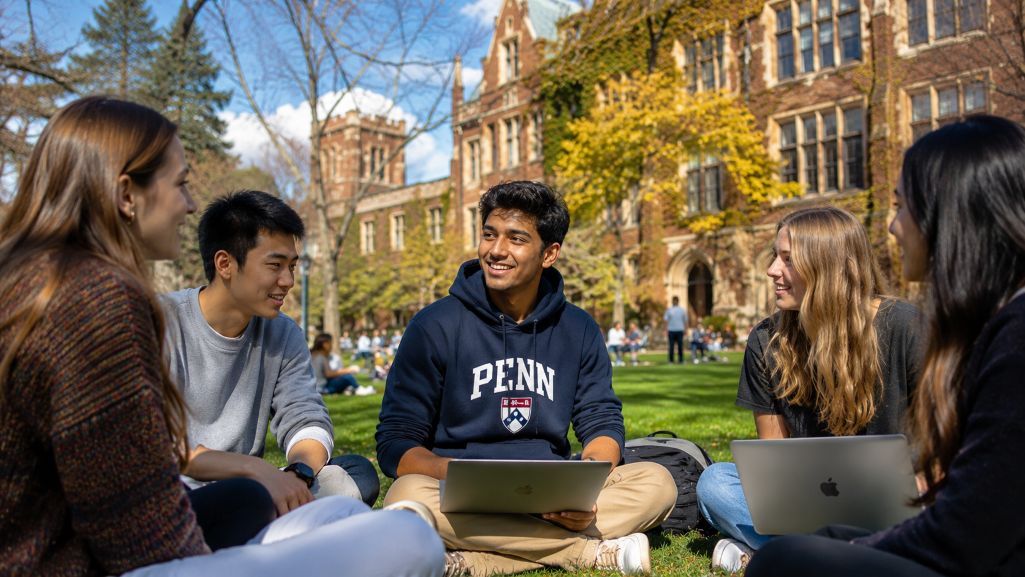
The USA continues to be one of the most preferred study destinations for international students, attracting learners from around the world with its academic excellence, innovation-driven learning environment, and strong career outcomes. If you're wondering why study in USA, the answer lies in its globally ranked US university, flexible education system, extensive research opportunities, and access to some of the world's largest employers.
From STEM programs and business degrees to healthcare and social sciences, students can choose from thousands of specialized courses. Combined with post-study work opportunities like OPT and a diverse multicultural environment, studying in the USA offers both academic growth and long-term career advantages.
Key Highlights of Studying in USA:
Particular | Details |
Top Universities | MIT, Harvard, Stanford, University of Pennsylvania, Cornell |
Popular Intakes | Fall (August/September), Spring (January), Summer (limited) |
Average Tuition Fees | USD 25,415–44,961 (INR 21.7L–38.5L) per year |
Post-Study Work Option | OPT (12 months) + STEM OPT (24 months) |
Popular Courses | MBA, Computer Science, Data Science, Engineering, Healthcare |
Average Graduate Salary | USD 70,000–155,000 (INR 60L–1.32Cr) depending on field |
Student Visa | F-1 Visa |
Top Reasons to Study in USA
There are eight reasons that consistently come up when international students explain their decision to study in USA. Each is backed by data, not just reputation.
1. Home to Many of the World's Top Universities:
A total of 197 US universities are ranked in the QS World University Rankings 2026, more than any other country, followed by the UK with 90 and China with 71. This depth means students have far more genuine choice than the small group of most-cited names.
2. Wide Range of Courses and Specialisations:
US universities offer an unusually broad spread of programmes, from highly specialised STEM tracks to interdisciplinary degrees combining business with technology or policy with data science. Few other countries match this breadth at the same academic depth.
3. Flexible Education System:
The US credit system allows students to choose electives outside their core major, switch concentrations within the first two years, and combine multiple disciplines. This flexibility is rare among major study destinations, most of which lock students into a fixed curriculum from year one.
4. Strong Research and Innovation Ecosystem:
Harvard, Caltech, Princeton, and MIT each achieved perfect scores of 100 in Citations per Faculty, reflecting both high research output and significant global influence, according to the QS World University Rankings 2026.
5. Global Career Opportunities:
A US degree carries weight with employers far beyond American borders, given the global reach of US-headquartered multinationals in technology, finance, and consulting. This recognition extends into hiring panels and graduate programmes across Asia, Europe, and the Middle East.
6. Diverse and Inclusive Student Community:
International students accounted for 6% of the total US higher education population in 2024/25, with students from more than 200 places of origin studying at US institutions.
7. Access to Industry Connections and Internships:
Most US universities maintain structured career services offices, employer recruitment events, and co-op or internship placements built directly into the curriculum, particularly in engineering, business, and computer science programmes at research-intensive institutions.
8. High Graduate Employability:
Strong on-campus recruitment combined with OPT work rights means many international graduates secure their first US role before their final semester ends, particularly at universities with established employer partnerships in their field.
Must check: List of Requirements to Study in USA
Best Universities to Study in USA
USA's top universities span both private Ivy League institutions and large public research universities, each offering distinct strengths across business, technology, and the sciences.
Harvard University holds fifth place globally, with the University of Pennsylvania at 15th, Cornell at 16th, Yale at 21st, and Princeton at 25th in the QS World University Rankings 2026.
University | QS World Ranking 2026 | Popular Programmes |
Massachusetts Institute of Technology (MIT) | #1 | Engineering, Computer Science, AI |
Harvard University | #5 | Business, Law, Medicine |
Stanford University | #3 | Engineering, MBA, Computer Science |
University of Pennsylvania | #15 | Business (Wharton), Finance |
Columbia University | #38 | Finance, Data Science, Journalism |
University of California, Berkeley | Top 30 | Engineering, Business, Computer Science |
Cornell University | #16 | Engineering, Hospitality, Business |
Also check: List of Exams Required to Study in USA in 2026
Popular Courses to Study in USA
US universities offer best courses in USA particular depth in technology, business, and healthcare-related fields, with these disciplines consistently attracting the largest share of international applicants and carrying the strongest graduate employment outcomes.
· Business and Management: MBA and undergraduate business programmes remain among the most applied-to courses, with strong pathways into consulting, finance, and corporate leadership roles at both domestic and multinational employers.
· Computer Science and IT: Computer science consistently ranks as the most in-demand course among international students, driven by sustained employer demand across the technology sector and direct eligibility for STEM OPT.
· Data Science and Artificial Intelligence: Data science and AI programmes have grown rapidly in recent years, with universities like MIT, Stanford, and Carnegie Mellon offering some of the most research-intensive programmes in the field globally.
· Engineering: Engineering remains a cornerstone of US graduate education, with strong industry placement, professional accreditation pathways, and consistently high starting salaries across mechanical, civil, and electrical disciplines.
· Healthcare and Public Health: Healthcare-related masters in USA, including public health and healthcare management, benefit directly from the scale of the US healthcare system and its ongoing demand for skilled administrators and analysts.
· Finance and Economics: Finance and economics programmes, particularly at universities near major financial hubs like New York and Boston, provide direct access to investment banking, asset management, and corporate finance recruitment.
· Law: The Juris Doctor (JD) and LLM programmes attract international students seeking exposure to US commercial law, though licensing to practise requires passing a state bar examination after graduation.
Cost of Studying in USA
Understanding the realistic total cost of studying in USA, not just the published tuition figure, is essential before comparing it against other study destinations.
Tuition Fees
The average published tuition fee at a public university was $11,371 per year for in-state students and $25,415 for out-of-state and international students, while private universities averaged $44,961 per year.
University Type | Approximate Annual Tuition Fees |
Public University (International/Out-of-State) | USD 25,415–28,000 (INR 21.7L–23.9L) |
Private University | USD 44,961–60,000 (INR 38.5L–51.3L) |
Top-Ranked Private Universities | USD 59,000–71,000 (INR 50.5L–60.8L) |
Living Expenses
According to the University of Iowa's official 2026–27; the cost of living in USA for international students are estimated at $14,022(around INR 12 lakh) per year, in addition to tuition and fees.
Expense Category | Approximate Annual Cost |
On-Campus Housing | USD 5,000–8,000 (INR 4.3L–6.8L) |
Off-Campus Apartment (1BR) | USD 7,250–30,600 (INR 6.2L–26.2L) |
Food and Personal Expenses | USD 3,000–5,000 (INR 2.6L–4.3L) |
Health Insurance Costs
According to Washington State University's official 2025–26 international student cost estimates, medical insurance costs $3,245 per year, in addition to tuition and living expenses.
University | Annual Health Insurance Cost |
University of Iowa | USD 2,628 (INR 2.25L) |
Washington State University | USD 3,245 (INR 2.78L) |
General Range Across US Universities | USD 1,500–3,250 (INR 1.28L–2.78L) |
Other Student Expenses
Additional billed expenses at US universities typically include technology fees, student activity fees, health fees, and international student orientation fees, which together can add several hundred dollars per semester on top of tuition.
Expense | Approximate Annual Cost |
Books and Supplies | USD 500–1,000 (INR 42.8K–85.5K) |
Technology and Student Service Fees | USD 1,000–2,000 (INR 85.5K–1.71L) |
International Student Orientation Fee | USD 120–250 (INR 10.3K–21.4K) |
Must check: Settle in USA
How to Apply to Universities in USA
Applying to a US university follows a five-step sequence that starts well before the actual application submission and continues through visa approval.
1. Choose a University and Course: Shortlist programmes based on ranking, course content, location, and career outcomes, cross-referencing both overall and subject-specific QS rankings before narrowing down options.
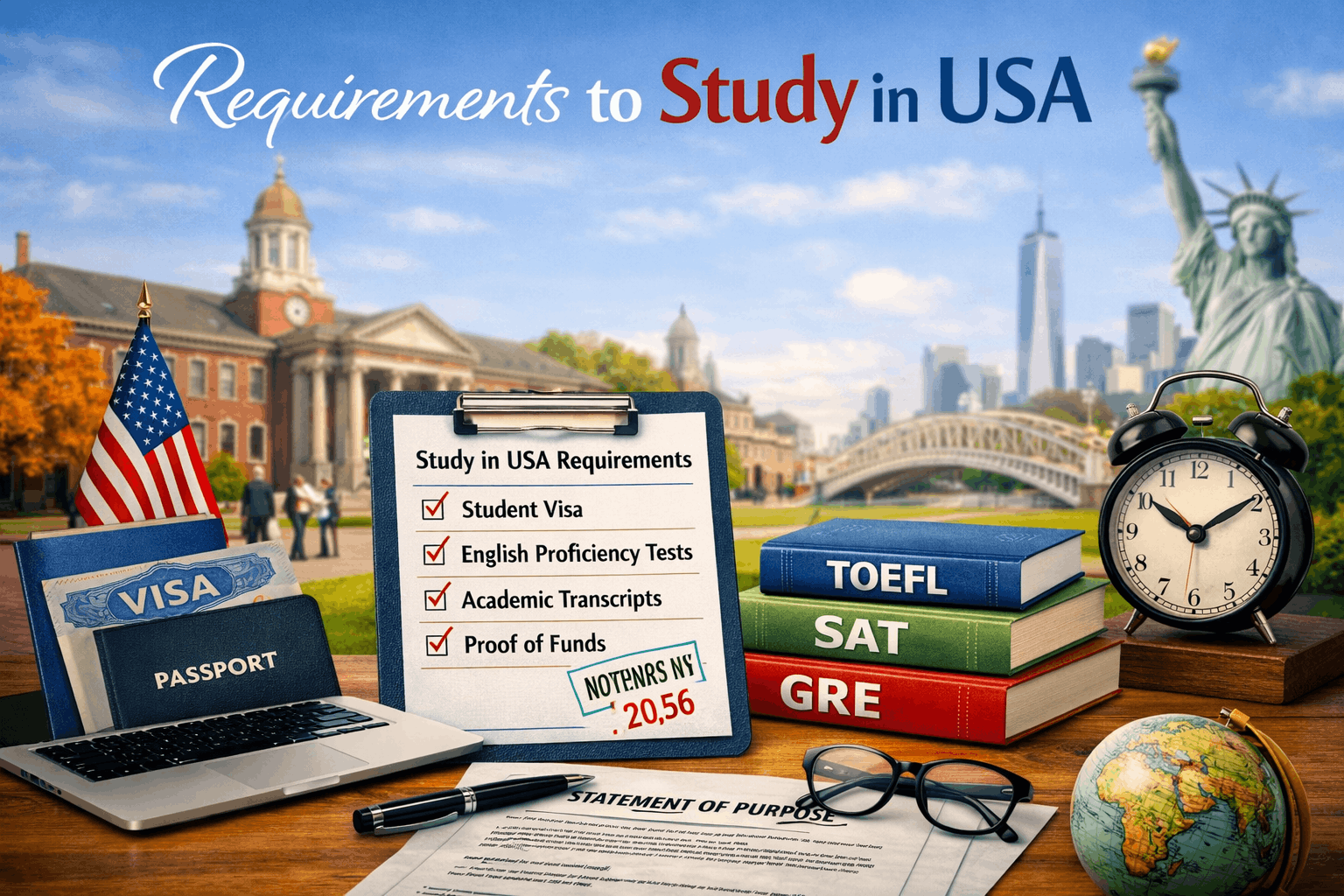
2. Check Eligibility Requirements: Review GPA expectations, standardised test requirements (SAT/ACT, GRE/GMAT), and English proficiency thresholds for each programme before committing application time and fees.
3. Prepare Required Documents: Gather transcripts, test scores, SOP, letters of recommendation, resume, and financial documentation well ahead of submission deadlines.
4. Submit Applications: Apply through each university's official admissions portal or centralised systems like the Common App, paying close attention to early and regular admission deadlines.
5. Apply for Student Visa: Once admitted, obtain Form I-20, pay the SEVIS fee, complete the DS-160, and attend the F-1 visa interview at a US embassy or consulate.
Scholarships for International Students in USA
USA's scholarship ecosystem spans government-funded exchange programmes and university-specific need or merit-based awards, with several top private institutions offering full-need coverage to admitted international students.
1. Fulbright Foreign Student Program:
The Fulbright Foreign Student Program funds graduate study for outstanding students from over 160 countries, with selection administered through binational Fulbright Commissions or US Embassies in each applicant's home country.
2. Hubert Humphrey Fellowship Program:
The Hubert H. Humphrey Fellowship Program provides 10 months of professional enrichment and non-degree graduate-level study in the United States for accomplished mid-level professionals from designated countries, with fellows nominated by US Embassies or Fulbright Commissions.
The fellowship is fully funded, covering full tuition and academic fees, a monthly living allowance including a settling-in grant, and a professional development allowance.
3. University-Specific Scholarships:
Stanford meets 100% of demonstrated financial need for every admitted student, including international students, with grants only and no loans in the aid package. Several other Ivy League institutions follow a similar need-blind policy for international applicants.
4. Merit-Based Scholarships:
At MIT, 58% of undergraduates receive financial aid, while at Caltech, almost 60% of undergraduates and 98% of graduate students receive full financial support, according to QS data on US university funding.
Also check: Fully Funded Masters Scholarships in USA for Indian Students in 2026
Career Opportunities After Studying in USA
USA's labour market consistently rewards advanced degrees and technical specialisation, with international graduates entering sectors that actively recruit from campus and through OPT work authorisation.
Top Industries Hiring International Graduates
Technology, finance, consulting, healthcare, and engineering account for the largest share of international graduate hires, with the strongest demand concentrated in roles requiring quantitative or technical training.
Average Salaries by Field:
Field | Approximate Annual Salary (Glassdoor, 2026) |
Technology (Software Engineer, Data Scientist) | USD 95,000–155,000 (INR 81.2L–1.32Cr) |
Finance (Financial Analyst, Investment Banker) | USD 70,000–120,000 (INR 60L–1.03Cr) |
Healthcare (Healthcare Administrator) | USD 75,000–110,000 (INR 64.1L–94.1L) |
Consulting (Business Consultant) | USD 90,000–140,000 (INR 77L–1.20Cr) |
Engineering (Project Engineer) | USD 75,000–105,000 (INR 64.1L–89.8L) |
Popular Job Roles:
Industry | Popular Roles |
Technology | Software Engineer, Data Scientist |
Finance | Financial Analyst, Investment Banker |
Healthcare | Healthcare Administrator |
Consulting | Business Consultant |
Engineering | Project Engineer |
Post-Study Work Opportunities in USA
USA's post-study work framework gives international graduates a clear, sponsorship-free runway to gain professional experience before transitioning to a longer-term work visa.
What is OPT?
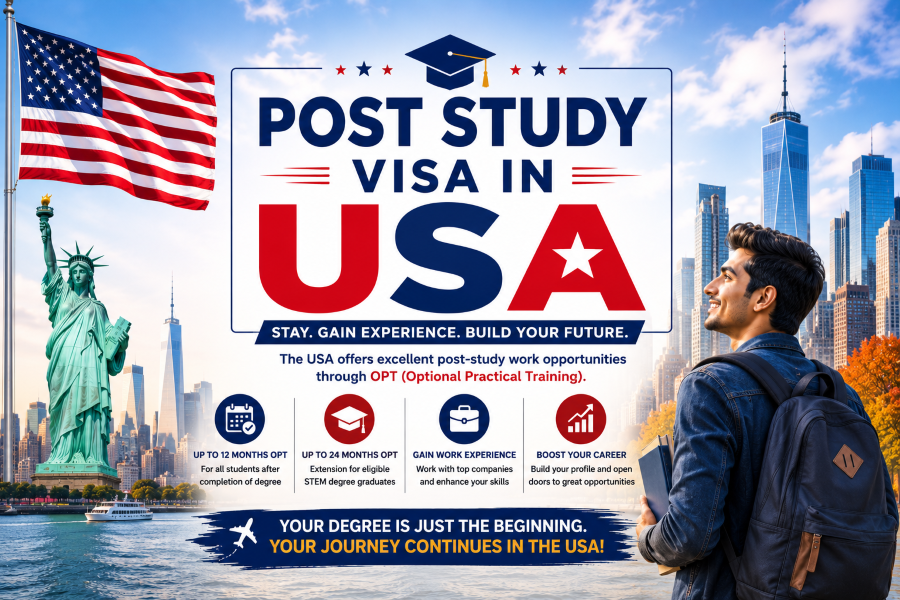
Optional Practical Training (OPT) allows F-1 visa holders to work in USA for 12 months after graduation in a role directly related to their field of study, without requiring employer sponsorship.
STEM OPT Extension
Graduates from STEM-designated degree programmes can extend their OPT period by an additional 24 months, bringing total work authorisation to 36 months. The number of students in OPT grew significantly in 2024/25, up 21% to 294,253 students, reflecting sustained demand for this work pathway.
Transitioning from Student Visa to Work Visa
After OPT or STEM OPT, graduates typically transition to an employer-sponsored H-1B visa through the annual lottery, or pursue other employment-based visa categories depending on their field and employer.
Student Life in USA
US campus life is built around a residential model that combines academic study with structured extracurricular involvement, creating a distinctly immersive environment for international students.
1. Campus Experience:
Most US universities offer on-campus housing, dining halls, libraries, and recreational facilities designed to keep student life centred around campus, particularly during the first year of study.
2. Cultural Diversity:
International students studied in all 50 states in 2024/25, with the largest growth reported in Texas, Illinois, and Missouri, showing representation well beyond traditional coastal hubs.
3. Student Clubs and Activities:
US universities typically host hundreds of student-run clubs, from academic and professional societies to cultural and recreational groups, giving international students multiple entry points into campus community life.
4. Support Services for International Students:
Nearly every US university maintains a dedicated international student office handling visa compliance, orientation, and ongoing advising throughout the academic programme.
Conclusion
The answer to why study in USA goes beyond academic rankings. The country offers a world-class education system, unmatched research opportunities, diverse course options, and strong connections to leading global employers. Students gain access to innovative learning environments, multicultural campuses, and valuable post-study work opportunities through OPT. Whether your goal is career advancement, research excellence, or international exposure, studying in the USA provides the skills, experience, and global recognition needed to succeed in an increasingly competitive job market.
Need help with your study abroad plan? Book a free counseling session with our experts today.