Study in Chicago
Table of Contents
- Why Study in Chicago?
- Top Universities to Study in Chicago
- Best Courses to Study in Chicago
- Eligibility and Admission Requirements to Study in Chicago
- Cost of Study in Chicago
- Cost of Living in Chicago
- Top Scholarships to Study in Chicago
- Intakes and Application Timeline for Study in Chicago
- How to Apply to Study in Chicago
- Student Visa Requirements for Study in Chicago
- Work Opportunities While Studying in Chicago
- Job Opportunity in USA After Studying in Chicago
- Author's POV
Study in Chicago offers access to one of the United States' leading education and business destinations. The city is home to globally recognised universities, world-class research facilities, and a strong employment market across finance, technology, healthcare, engineering, and consulting. Alongside prestigious institutions like the University of Chicago and Northwestern University, Chicago also has several affordable public universities that attract international students every year.
Tuition fees generally range from USD 23,592 to USD 114,912 per year (approx. INR 22.5 lakh–109.5 lakh), while annual living expenses average USD 15,300–18,000 (approx. INR 14.6 lakh–17.1 lakh). Combining academic excellence, industry exposure, and comparatively lower living costs than New York or San Francisco, study in Chicago remains a popular choice for higher education in the US.
Key Highlights of Study in Chicago:
Key Highlights | Details |
Top Universities | University of Chicago, Northwestern University |
Top Colleges | DePaul University, University of Illinois Chicago (UIC), Loyola University Chicago |
Course Duration | 12 to 24 months postgraduate; 4 years undergraduate |
Popular Fields | Business, Computer Science, Data Science, Finance, Consulting |
Tuition Fees | USD 23,592–114,912/year (approx. INR 22.5L–109.5L) |
Living Expenses | USD 15,300–18,000/year (approx. INR 14.6L–17.1L) |
Post-Study Work Option | OPT (12 months) + STEM OPT (24 months, if applicable) |
Why Study in Chicago?
Chicago offers international students more than just a place to earn a degree. It combines world-class education, a strong job market, cultural diversity, and a relatively affordable lifestyle compared with cities like New York and San Francisco. As one of the largest economic hubs in the US, Chicago gives students access to opportunities across finance, technology, consulting, healthcare, and business while enjoying the experience of living in a globally connected city.
1. A city built for career growth:
Chicago is home to a diverse economy with global companies such as McDonald's Corporation, Boeing, United Airlines Holdings, and Kraft Heinz. This strong employer presence creates opportunities for internships, networking, and career development across multiple industries.
2. Access to a wide range of study options:
Whether you are planning to study business, computer science, engineering, data science, or social sciences, Chicago offers programmes across different specialisations and budget ranges. Students can choose from highly competitive institutions as well as universities that provide more accessible admission pathways while still benefiting from the city's professional ecosystem.
3. A more affordable major US city:
Compared with other popular destinations such as New York and San Francisco, Chicago offers a lower cost of living while still providing the advantages of a major metropolitan city. Students can experience a vibrant urban lifestyle, excellent public transport, and diverse neighbourhoods without the same financial pressure found in some coastal cities.
4. A growing hub for technology and innovation:
Chicago's technology sector has expanded significantly, creating demand for professionals in areas such as artificial intelligence, data science, cybersecurity, and software development. Students in STEM fields can benefit from research opportunities, industry connections, and access to companies investing in emerging technologies.
5. Opportunities after graduation:
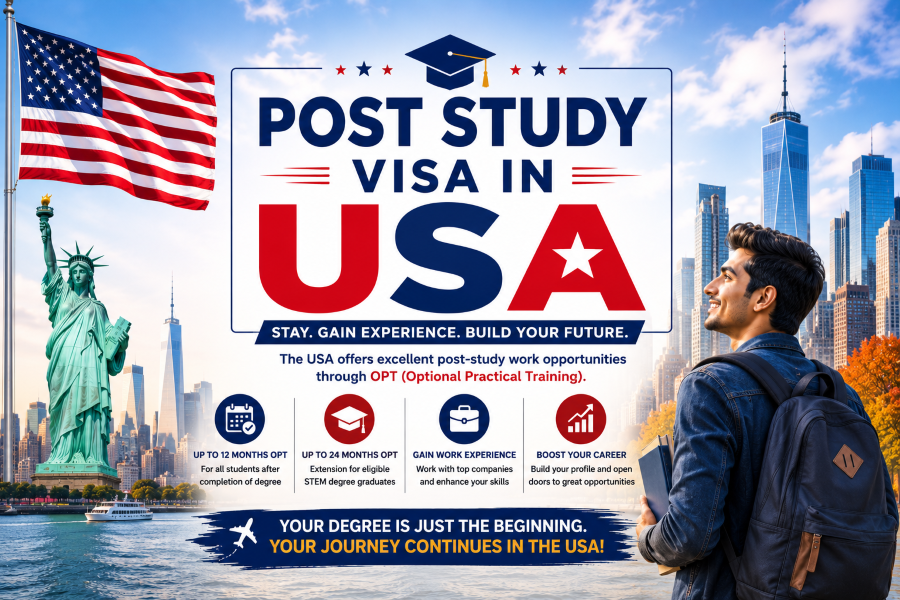
International students graduating from US universities can apply for Optional Practical Training (OPT), allowing them to gain professional experience after completing their studies. Those graduating from STEM-designated programmes may qualify for an additional 24-month STEM OPT extension, providing more time to build their careers in the US.
Top Universities to Study in Chicago
Chicago is home to a mix of globally recognised research universities and career-focused institutions that attract students from around the world. While universities like the University of Chicago and Northwestern University are known for their academic excellence and strong global reputation, other institutions in the city offer industry-focused programmes, flexible admission options, and strong connections with Chicago’s growing job market.
University | QS World University Ranking 2027 | Popular Study Areas |
University of Chicago | #24 globally | Economics, Business, Data Science, Finance, Social Sciences |
Northwestern University | #45 globally | Business, Engineering, Journalism, Computer Science, Data Science |
Top Colleges to Study in Chicago
Beyond the city's globally ranked universities, Chicago also offers several institutions that provide strong academic programmes, practical learning opportunities, and access to the city's extensive employer network.
Institution | QS World University Ranking 2027 | Popular Programmes |
University of Illinois Chicago | #370 globally | Business Analytics, Computer Science, Engineering, Public Health |
DePaul University | Not ranked in QS World University Rankings 2027 | Computer Science, Data Science, Business, Information Technology |
Loyola University Chicago | #501-550 globally | Data Science, Accounting, Marketing, Management |
Best Courses to Study in Chicago
The most strategic courses to study in Chicago reflect the city's dominant high-income sectors: finance, consulting, computer science, and data science. For international students, choosing a field in Chicago is genuinely useful because programmes at both elite and accessible universities connect directly to employers minutes from campus.
1. Business and Finance Courses
Chicago's business schools, particularly Chicago Booth and Kellogg, are known specifically for finance, consulting, and analytics-heavy MBA and specialised master's programmes.
Course | University | Approx. Annual Tuition |
Full-Time MBA | University of Chicago (Booth) | USD 89,976/year (approx. Rs. 85.7L) |
Full-Time MBA | Northwestern (Kellogg) | USD 86,370/year (approx. Rs. 82.2L) |
MBA | UIC (Liautaud) | USD 23,102–37,306/year (approx. Rs. 22.0L–35.5L) |
2. Computer Science and Data Science Courses
Given Chicago's growing tech sector, computer science and data-focused programmes remain consistently in demand, with dedicated institutes at both elite universities driving research and industry ties.
Course | University | Approx. Annual Tuition |
MS in Applied Data Science (12 courses) | University of Chicago | USD 76,608 total programme (approx. Rs. 73.0L) |
MS Machine Learning and Data Science | Northwestern (McCormick) | USD 22,973/quarter, approx. USD 114,865 total (5 quarters) |
MS Computer Science | DePaul University | USD 23,000+/year (approx. Rs. 21.9L+) |
MS Data Science | DePaul University | USD 23,592/year (approx. Rs. 21.4L) |
MS Data Science | Loyola University Chicago | AMP pathway and Returning Rambler Scholarship available (25% off graduate tuition) |
Eligibility and Admission Requirements to Study in Chicago
Admission requirements in Chicago are structured to accommodate both highly selective research university pathways and more accessible, applied programmes at accessible universities like DePaul and UIC.
Academic Requirements
Chicago's universities evaluate candidates based on prior academic marks, standardised test scores where applicable, and English language proficiency, with requirements varying sharply by institution tier.
Institution Tier | Minimum Academic Requirement | Key Notes |
Highly Selective (UChicago, Northwestern) | Exceptional GPA, strong academic record; competitive standardised test scores where required | Extremely competitive; strong research or professional profile expected |
Mid-Tier (DePaul, UIC) | GPA around 3.0/4.0 | More accessible; DePaul explicitly notes competency-demonstrating prerequisite courses accepted |
Accessible (Loyola) | GPA around 3.0/4.0; AMP pathway for current undergraduates | Accelerated Master's Pathway allows earning graduate credits at undergraduate tuition rates |
English Language Requirements
International applicants whose first language isn't English must submit an approved test score, with DePaul's requirements offering a useful general benchmark across Chicago's universities.
Test | Minimum Score (DePaul, representative benchmark) |
IELTS Academic | 6.5 overall |
TOEFL iBT | 80 |
PTE Academic | 53 |
Duolingo English Test | 115 |
Other Application Documents Required
Gathering a complete application packet early is essential to secure both your admission offer and your subsequent Form I-20 for visa processing.
Academic Transcripts: Official transcripts and degree certificates from all previously attended institutions, with WES evaluation often required
Statement of Purpose: A personalised letter explaining your academic background, career goals, and why Chicago specifically fits your plans
Letters of Recommendation: Two to three letters from academic or professional referees
Resume/CV: Highlighting relevant internships, research, or professional work experience
Standardised Test Scores: GRE or GMAT where required, particularly for MBA and select technical programmes
Cost of Study in Chicago
The cost of studying in Chicago depends on the university, course level, and specialisation you choose. Compared with many major US cities, Chicago offers a wider range of options, from globally ranked private universities with premium tuition fees to more affordable institutions offering industry-focused programmes.
Apart from tuition fees, students should also consider expenses such as accommodation, food, transportation, health insurance, and personal spending while planning their budget. On average, international students planning to study in Chicago should expect annual tuition fees between USD 25,000 and USD 80,000 (approximately INR 21 lakh to INR 68 lakh).
University | Average Annual Tuition Fees for International Students | Popular Programmes |
University of Chicago | USD 65,000–70,000 (approx. INR 56–60 lakh) | Economics, Data Science, Finance, Social Sciences |
Northwestern University | USD 70,000+ (approx. INR 60 lakh+) | Business, Engineering, Computer Science, Journalism |
University of Illinois Chicago | USD 30,000–45,000 (approx. INR 26–39 lakh) | Business Analytics, Computer Science, Public Health |
DePaul University | USD 25,000–45,000 (approx. INR 21–39 lakh) | Data Science, Business, Information Technology |
Loyola University Chicago | USD 45,000–55,000 (approx. INR 39–47 lakh) | Management, Accounting, Marketing |
Note: Tuition fees may vary depending on the programme, credits, and academic year. Students should always check the latest fee structure on the official university website before applying.
Cost of Living in Chicago
Living in Chicago can be more affordable than cities like New York and San Francisco, while still offering the advantages of a major global city. The overall cost depends on your accommodation choice, lifestyle, and spending habits. Students living in shared apartments or university housing can significantly reduce their monthly expenses.
A single person’s monthly expenses in Chicago are around USD 1,300 (approximately INR 1.1 lakh) excluding rent. Accommodation is usually the biggest expense, with prices varying based on location, apartment type, and whether students choose private or shared housing.
Expense Category | Average Monthly Cost |
Rent for 1-bedroom apartment (City Centre) | USD 2,400 (approx. INR 2.1 lakh) |
Rent for 1-bedroom apartment (Outside City Centre) | USD 1,700 (approx. INR 1.5 lakh) |
Food and groceries | USD 300–500 (approx. INR 26,000–43,000) |
Transportation | USD 75–100 (approx. INR 6,500–8,600) |
Utilities and Internet | USD 150–250 (approx. INR 13,000–22,000) |
Personal expenses | USD 200–300 (approx. INR 17,000–26,000) |
Students can manage their expenses by choosing shared accommodation, using Chicago’s public transport system, preparing meals at home, and taking advantage of student discounts available across the city.
Top Scholarships to Study in Chicago
Studying in Chicago can be a significant investment, but international students have access to several scholarships and funding options that can help reduce the financial burden. Universities across the city offer merit-based scholarships, graduate assistantships, and programme-specific awards based on academic performance, leadership skills, professional experience, and overall application strength.
Scholarship availability and eligibility criteria vary by university and course. Some awards are offered automatically during the admission process, while others require a separate application.
Scholarship / Award Name | Eligible Institution | Coverage & Benefits |
DePaul Graduate Assistantships (GTA) | DePaul University | Provides financial support through graduate teaching or research roles, including a stipend of around USD 8,000/year (approx. INR 7 lakh) and tuition assistance of up to USD 19,000 (approx. INR 16 lakh) |
DePaul Merit Scholarships | DePaul University | Merit-based awards of up to USD 10,000 (approx. INR 8.5 lakh) for eligible students based on academic achievements |
Returning Rambler Scholarship | Loyola University Chicago | Offers eligible students a 25% reduction in graduate tuition fees |
Chicago Booth Merit-Based Fellowships | Chicago Booth School of Business | Competitive fellowships that provide partial tuition support for outstanding MBA candidates |
Kellogg Merit-Based Scholarships | Kellogg School of Management | Merit awards offered to selected MBA students, ranging from partial funding to full tuition coverage |
Intakes and Application Timeline for Study in Chicago
Chicago's universities generally follow the standard US academic calendar, with Fall as the primary intake, though several institutions, including DePaul, also offer Winter and Spring entry points.
Intake | Programme Start | Application Timeline |
Fall Intake (Main) | August/September | Applications typically open 8-12 months prior; deadlines vary by university |
Winter Intake (DePaul) | January | International deadline typically mid-October |
Spring/Summer Intake (Select programmes) | March/June | Available at select institutions; check directly with each university |
Note: Fall remains the primary and most practical entry point for study in Chicago, offering the widest programme selection and the strongest scholarship and assistantship availability across most universities.
How to Apply to Study in Chicago
The application process for study in Chicago is straightforward but requires good organisation, since document preparation, standardised testing, and visa processing all need to happen within a tight window.
Step | What to Do |
Step 1: Shortlist Universities | Compare UChicago, Northwestern, DePaul, UIC, and Loyola based on programme, tuition, and admission competitiveness |
Step 2: Check Eligibility | Review GPA requirements, English test minimums, and GRE/GMAT policies |
Step 3: Prepare Language Tests | Sit IELTS, TOEFL, or Duolingo well ahead of your application deadline |
Step 4: Compile Documents | Gather transcripts, SOP, LORs, CV, and passport |
Step 5: Submit Application | Apply through each university's official admissions portal; pay application fees |
Step 6: Apply for Scholarships or Assistantships | Submit scholarship or GTA applications alongside or immediately after your admissions application |
Step 7: Accept Offer | Confirm your place by accepting the offer and paying any required deposit |
Step 8: Receive Form I-20 and Apply for F-1 Visa | Once financial proof is confirmed, your university issues Form I-20 to begin your visa application |
Step 9: Arrange Pre-Departure | Book accommodation, organise health insurance, and prepare travel documents |
Student Visa Requirements for Study in Chicago
International students admitted to a programme in Chicago must apply for an F-1 Student Visa, issued by the US Department of State, before travelling. The process is the same regardless of which Chicago university you attend.
Requirement | Detail | Approx. Amount |
Form I-20 | Issued by your SEVP-approved university after admission and financial proof | Required |
Proof of Financial Capacity | Tuition plus living costs for the first year | USD 40,000–130,000, university-dependent |
SEVIS I-901 Fee | Paid online before your visa interview | USD 350 (approx. Rs. 33,300) |
DS-160 / MRV Visa Fee | Nonimmigrant visa application processing fee | USD 185 (approx. Rs. 17,600) |
Medical Examination | Required for applicants from certain countries | — |
English Test Scores | IELTS, TOEFL, or Duolingo as required by the programme | — |
Note: After completing their degree, eligible graduates can apply for Optional Practical Training (OPT), allowing up to 12 months of work authorisation, extended to 24 additional months for STEM-designated programmes, common across Chicago's computer science and data science degrees.
Work Opportunities While Studying in Chicago
International students on an F-1 visa can work on campus for up to 20 hours per week during the academic term, and full-time during scheduled breaks, without needing separate authorisation.
Role | Work Limit | Approx. Hourly Rate |
Graduate Teaching Assistant | 20 hours/week during term | USD 20–28/hour (approx. Rs. 1,905–Rs. 2,667/hour) |
Research Assistant | 20 hours/week during term | USD 18–25/hour (approx. Rs. 1,715–Rs. 2,381/hour) |
Campus or Admin Support | 20 hours/week during term | USD 15–18/hour (approx. Rs. 1,429–Rs. 1,715/hour) |
Tech Internship (CPT) | Programme-specific; often full-time | USD 25–40/hour (approx. Rs. 2,381–Rs. 3,810/hour) |
Job Opportunity in USA After Studying in Chicago
Job opportunities after studying in Chicago are concentrated in consulting, finance, and technology, with consistently ranking Financial Services and Management & Consulting as the top-paying industries across nearly every role in the city.
Average salary in the USA after studying in Chicago is particularly strong for finance, consulting, and computer science graduates, given the city's direct proximity to major corporate headquarters and a growing tech sector.
Job Role | Approx. Annual Salary (USD) | INR Value |
Software Engineer II (DePaul CS median) | USD 85,000 | Rs. 81.1L |
Financial Analyst | USD 92,578–158,356 | Rs. 88.1L–150.7L |
Marketing Manager | USD 110,989 (average) | Rs. 105.6L |
Management Consulting Analyst | USD 96,454–145,576 | Rs. 91.8L–138.6L |
Management Consultant | USD 65,943–177,885 | Rs. 62.7L–169.2L |
Note: DePaul's own career outcomes report notes graduates working at Allstate, Amazon, BMO Harris Bank, Deloitte, Meta, GE Capital, and IBM, reflecting Chicago's genuinely broad employer base across finance, tech, and consulting.
Author's POV
Choosing to study in Chicago is not just about selecting a university with a strong ranking. It is about finding the right mix of academic quality, affordability, and career opportunities. While cities like New York often get more attention from international students, Chicago offers a similar professional ecosystem across finance, consulting, technology, and business at a comparatively lower cost.
The city provides options for every type of student. Universities like the University of Chicago and Northwestern offer global recognition and strong research opportunities, while institutions such as DePaul, UIC, and Loyola provide career-focused programmes with better affordability. The difference in tuition can be significant, but a lower-cost option does not always mean fewer opportunities.
With access to major employers, internship opportunities, and STEM-focused programmes, Chicago allows students to build valuable skills while managing expenses. For students looking for a respected US degree with strong career potential, Chicago remains a practical and rewarding choice.
If you want clarity on your next steps, you can book a free counseling session with our experts. Someone from the team will walk you through your options and answer your questions.