Masters in USA for Indian Students 2026
Table of Contents
A Masters in USA is one of the most popular choices for Indian students seeking globally recognised qualifications, advanced research opportunities, and strong career prospects. Most master's programmes take 1 to 2 years to complete, with annual tuition fees ranging from USD 20,000–100,000 (approx. INR 18.9L–94.5L) depending on the university and course.
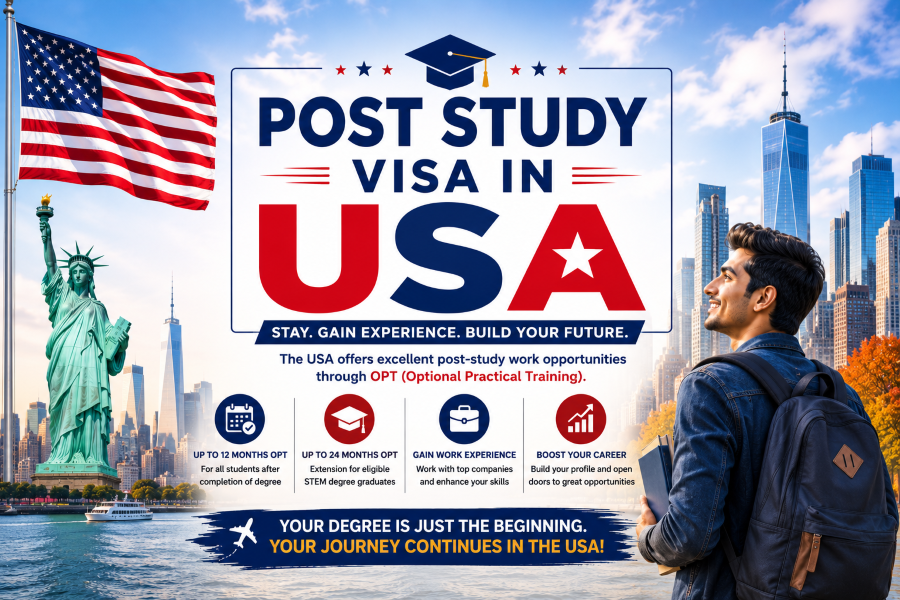
To apply, students typically need a recognised bachelor's degree, a competitive GPA, English language proficiency through IELTS or TOEFL, and, for some programmes, GRE or GMAT scores. One of the biggest advantages of pursuing a Masters in USA is the opportunity to gain post-study work experience through Optional Practical Training (OPT), with eligible STEM graduates able to work in the US for up to 36 months after graduation.
Top Universities for Masters in USA
Home to some of the world's highest-ranked universities, USA continues to be a preferred destination for Masters studies among international students.
However, choosing a university is about more than just rankings. It is about finding the right balance of academic excellence, research opportunities, career support, and industry connections that align with your goals.
Here are some of the top Universities in USA for Masters that offer strong academics, research opportunities, career support, and global exposure:
Top Universities in USA for Masters | US News Best National University Rankings 2026 | Approximate Annual Master's Tuition Fee (USD/ INR) |
Princeton University | #1 | USD 60,000–70,000 (INR 56.7L–66.2L) |
Massachusetts Institute of Technology (MIT) | #2 | USD 65,000–95,000 (INR 61.4L–89.8L) |
Harvard University | #3 | USD 55,000–85,000 (INR 52.0L–80.3L) |
Yale University | #4 | USD 45,000–80,000 (INR 42.5L–75.6L) |
Stanford University | #4 | USD 60,000–90,000 (INR 56.7L–85.1L) |
University of Chicago | #6 | USD 55,000–85,000 (INR 52.0L–80.3L) |
University of Pennsylvania | #7 | USD 45,000–90,000 (INR 42.5L–85.1L) |
Johns Hopkins University | #7 | USD 50,000–80,000 (INR 47.3L–75.6L) |
University of California, Berkeley (UCB) | #15 | USD 30,000–75,000 (INR 28.4L–70.9L) |
Note: Tuition fees are indicative annual estimates for international students and may vary depending on the program, department, and course duration.
Must check: why study in USA
Top Masters Courses in USA
For many students, choosing a best courses in USA comes down to one key question: where will it take me after graduation?
Programs like Data Science, AI, Engineering, Business and masters in Computer Science in USA consistently rank among the most popular choices due to their strong job demand, career growth potential, and STEM-related work opportunities.
Here are some of the most popular Masters courses in USA and the specializations available within each field:
1. Masters in Computer Science in USA
One of the most popular choices among international students, Masters in Computer Science in USA prepares graduates for careers in software development, artificial intelligence, cybersecurity, and cloud computing.
Popular specialisations include:
Artificial Intelligence
Machine Learning
Cybersecurity
Software Engineering
Cloud Computing
Data Engineering
2. Masters in Business Analytics USA
The Masters in Business Analytics USA is ideal for students interested in using data to solve business problems and support strategic decision-making across industries.
Popular specialisations include:
Business Intelligence
Marketing Analytics
Financial Analytics
Operations Analytics
Supply Chain Analytics
Predictive Analytics
3. Masters in Data Science USA
Demand for data professionals continues to grow globally, making the Masters in Data Science USA one of the fastest-growing postgraduate degrees.
Popular specialisations include:
Big Data Analytics
Artificial Intelligence
Machine Learning
Data Engineering
Business Analytics
Data Visualisation
4. Masters in Public Health in USA
The Masters in Public Health in USA equips students to address global health challenges through research, policy development, and healthcare management.
Popular specialisations include:
Epidemiology
Global Health
Biostatistics
Health Policy
Environmental Health
Community Health
5. Masters in Finance in USA
The Masters in Finance in USA prepares students for careers in banking, investment management, financial consulting, and corporate finance.
Popular specialisations include:
Investment Management
Corporate Finance
Financial Engineering
Risk Management
FinTech
Asset Management
While these are some of the most popular choices, the best master's program for you will depend on your interests, career aspirations, and long-term plans.
Must check: List of Requirements to Study in USA
Eligibility and Admission Requirements for Masters in USA
Getting admission to a Masters in USA involves more than meeting the minimum academic requirements. Universities evaluate your academic performance, English language proficiency, supporting documents, and, in some cases, work or research experience. The exact requirements vary by university and programme, but the sections below cover what most international students can expect during the application process.
1. Academic Qualifications
Your undergraduate academic record is one of the most important parts of your application. Most universities look for students with a strong academic foundation relevant to the programme they are applying for.
Requirement | Details |
Bachelor's Degree | A recognised bachelor's degree from an accredited university |
Minimum GPA | Around 3.0 on a 4.0 scale (top universities may require a higher GPA) |
Relevant Academic Background | Preferred for programmes such as Engineering, Computer Science, Data Science, Public Health, and other technical fields |
Academic Transcripts | Official transcripts from all previously attended colleges or universities |
2. GRE or GMAT Scores
Many Universities in USA for Masters have adopted test-optional policies, but some programmes still require or recommend standardised test scores. The requirement depends on both the university and the course.
Test | Commonly Required For |
GRE | Engineering, Computer Science, Data Science, Mathematics, and Science programmes |
GMAT | MBA, Finance, Business Analytics, Management, and related business programmes |
Test Waivers | Available at many universities for applicants with strong academic or professional profiles |
3. English Language Proficiency
International students whose previous education was not in English must usually submit an approved English language test score.
English Test | Typical Score Range |
IELTS Academic | 6.5–7.5 |
TOEFL iBT | 80–100+ |
PTE Academic | 55–75 |
Duolingo English Test | 105–125 |
Note: Minimum score requirements vary by university and programme.
4. Work Experience, Projects, or Research Exposure
Work experience is not compulsory for most master's programmes, but relevant practical experience can make your application more competitive.
Programme Type | What Universities Typically Look For |
STEM Programmes | Internships, coding projects, research work, laboratory experience, technical portfolios, or final-year projects |
Professional Programmes | 1–3 years of relevant work experience may be preferred for Business Analytics, Finance, Engineering Management, and similar courses |
Research-Based Programmes | Research projects, thesis work, publications, conference papers, or laboratory experience are often valued more than corporate experience |
5. Supporting Documents
Along with meeting academic requirements, applicants must submit several documents that help universities evaluate their overall profile.
Document | Purpose |
Statement of Purpose (SOP) | Explains your academic background, career goals, and reasons for choosing the programme |
Letters of Recommendation (LORs) | Usually 2–3 recommendations from professors, employers, or research supervisors |
Resume/CV | Highlights education, internships, projects, work experience, technical skills, and achievements |
Academic Transcripts | Official records of previous academic qualifications |
Financial Documents | Bank statements, proof of funds, scholarship letters, or sponsorship documents required for admission and visa processing |
Also check: List of Exams Required to Study in USA in 2026
How to Apply for Masters in USA?
The application process for a masters in USA can feel lengthy at first, but it becomes much easier when students know what to do at each stage.
From choosing the right course to preparing test scores, documents, university applications, and visa steps, every part needs proper planning.
Here’s a simple step-by-step look at how students can apply for masters programs in USA:
Step-1: Research universities and courses: Compare programs based on curriculum, tuition fees, location, STEM eligibility, research scope, and career outcomes.
Step-2: Check eligibility requirements: Review GPA criteria, English proficiency scores, GRE/GMAT rules, prerequisites, and course-specific requirements.
Step-3: Prepare for required tests: Take IELTS, TOEFL, PTE, or Duolingo if required. Some programs may also need GRE or GMAT scores.
Step-4: Gather application documents: Keep transcripts, SOP, LORs, resume/CV, passport, test scores, and financial documents ready.
Step-5: Submit university applications: Apply through the university portal, upload documents, pay the application fee, and track deadlines carefully.
Step-6: Track admission updates: Check emails and application portals regularly for decisions, interviews, or additional document requests.
Step-7: Accept the admission offer: Confirm enrollment, pay the deposit if required, and complete university-specific admission steps.
Step-8: Apply for the F-1 student visa: After receiving the required admission documents, start the visa process and prepare for the interview.
Masters Intakes in USA
Choosing the right intake for a masters in USA depends on how ready the student is with test scores, documents, finances, and visa planning.
Since most universities offer more than one admission cycle, students can pick the intake that gives them enough time to prepare a strong application.
The main masters intakes in USA are:
Fall Intake: Starts around August–September and is the most preferred intake, with the highest number of universities, courses, scholarships, and assistantship options.
Spring Intake: Starts around January and is a good option for students who miss the Fall cycle or need more time to prepare their applications.
Summer Intake: Starts around May–June and is limited to selected universities and specific programs.
Cost of Studying Masters in USA
The Masters in USA Cost is not the same for every student. It usually depends on the university, course, city, and program duration, with tuition fees ranging from USD 20,000–100,000 per year (INR 18.9L–94.5L).
Public universities are often more budget-friendly, while private universities and high-demand courses such as Computer Science, Data Science, Engineering, Finance, and Business Analytics usually fall on the higher side.
Broadly, tuition fees can be understood as:
Masters in USA fees at top-ranked/private universities: USD 60,000–100,000 per year (INR 56.7L–94.5L)
Masters in USA fees at mid-tier universities: USD 35,000–60,000 per year (INR 33.1L–56.7L)
Masters in USA fees at affordable/public universities: USD 20,000–35,000 per year (INR 18.9L–33.1L)
Students should check both the annual tuition fee and the total program cost, as a shorter program with higher annual fees may sometimes Masters in USA Cost less overall than a two-year program.
Cost of Living in USA for Masters Students
Apart from tuition fees, students should also budget for daily living expenses while studying in USA.
The monthly cost of living in USA for a single person is around USD 1,100–1,200 (INR 1.04L–1.13L) excluding rent.
Accommodation: USD 1,000–4,300/month (INR 94.5K–4.06L/month) for a 1-bedroom apartment in the city centre
Food and Groceries: USD 300–600/month (INR 28.4K–56.7K/month)
Transportation: USD 35–140/month (INR 3.3K–13.2K/month) for a monthly public transport pass
Utilities: USD 100–400/month (INR 9.4K–37.8K/month)
Personal and Leisure Expenses: USD 100–300/month (INR 9.4K–28.4K/month)
Overall, the total annual cost of studying a masters in USA, including tuition and living expenses, can range from around USD 45,200–166,000 per year (INR 42.7L–1.57Cr), depending on the university, city, and lifestyle.
Must check: Settle in USA
Scholarships for Masters in USA
Scholarships can significantly reduce the overall cost of studying in the United States by covering tuition fees, living expenses, travel, health insurance, or other academic costs. Students looking for Fully Funded Masters Scholarships in USA for Indian Students should begin researching scholarship opportunities while shortlisting universities, as many awards have early application deadlines, limited seats, and specific eligibility requirements.
Here are some of the top scholarships for masters in USA:
1. Fulbright Foreign Student Program
Eligibility: Non-US citizens residing in their home country at the time of application, with a bachelor's degree equivalent to a US degree and a strong academic record. Recommended English scores: TOEFL PBT 550, TOEFL iBT 79–80, or IELTS 6.5.
Coverage: Includes J-1 visa sponsorship, funding support, health benefits, and enrichment activities.
2. Knight-Hennessy Scholars Program (Stanford University)
Eligibility: Applicants must apply to and enroll in a full-time Stanford graduate program (MA, MS, MBA, MFA, JD, MD, or PhD). For the 2027 cohort, candidates must have earned their first bachelor's degree in January 2020 or later.
Coverage: Funds up to 3 years of study, covering tuition and fees, living and academic expenses, an annual travel stipend, and a one-time relocation grant.
3. AAUW International Fellowships
Eligibility: Open to women who are not US citizens or permanent residents and plan to pursue full-time graduate study in USA, particularly in STEM fields. Applicants should demonstrate academic excellence and commitment to supporting women and girls.
Coverage: Provides funding for master's, academic doctoral, and professional doctoral programs.
4. Rotary Peace Fellowship
Eligibility: Applicants need a bachelor's degree, English proficiency, leadership potential, commitment to peace and cross-cultural understanding, and at least 3 years of relevant full-time work experience.
Coverage: Covers tuition, fees, accommodation, meals, round-trip travel, and internship or field-study costs. Rotary awards up to 50 master's fellowships annually.
5. Aga Khan Foundation International Scholarship Programme
Eligibility: Candidates must have a strong academic record, a bachelor's degree (or equivalent professional experience), financial need, admission to a reputable postgraduate institution, and leadership potential. Preference is given to applicants under 30.
Coverage: Supports tuition and living expenses through a 50% grant and 50% loan model. Funding is available for the full duration of eligible master programs.
6. Harvard University – Need-Based Financial Aid
Eligibility: Open to international students admitted to Harvard graduate programs. Awards are based on demonstrated financial need along with academic merit across all nationalities.
Coverage: Harvard meets 100% of demonstrated financial need for eligible students. Support may include tuition, living expenses, health insurance, and other academic costs depending on the program.
Career Opportunities After Masters in USA
A masters in USA can do more than add a degree to a student’s resume. It can help build a career in fast-growing fields like technology, engineering, finance, healthcare, analytics, research, and business.
STEM programs are especially popular among international students because they may offer longer post-study work opportunities through OPT and STEM OPT.
The career outlook is strong too, with data scientist jobs projected to grow by 34% and software developer-related roles by 15% between 2024 and 2034, according to U.S. Bureau of Labor Statistics.
Here are the top job roles along with their approximate salary ranges in 2026:
Job Role | Approx. Annual Salary (USD) | Approx. Annual Salary (INR) |
Software Engineer | USD 120,000–191,000 | INR 1.13Cr–1.80Cr |
Healthcare Administrator | USD 118,000–183,000 | INR 1.11Cr–1.73Cr |
Machine Learning Engineer | USD 100,000–200,000 | INR 94.5L–1.89Cr |
Mechanical Engineer | USD 99,000–157,000 | INR 1.12Cr–1.83Cr |
Electrical Engineer | USD 94,000–157,000 | INR 88.8L–1.48Cr |
Operations Manager | USD 80,000–133,000 | INR 75.6L–1.26Cr |
Source: Glassdoor
Top Recruiters for Masters Graduates in USA:
Google
Microsoft
Amazon
Apple
Meta
IBM
Tesla
Also check: Post Study Visa in USA
Author's POV
A Masters in USA remains one of the strongest investments for students who want access to world-class education, cutting-edge research, and global career opportunities. While the tuition fees and living expenses can seem high, the return on investment often comes through higher earning potential, industry exposure, and access to some of the world's largest employers.
The biggest advantage isn't just studying at a top-ranked university. It's the flexibility the US education system offers. Students can choose from thousands of specialised programmes, gain hands-on experience through internships and research projects, and benefit from Optional Practical Training (OPT), with eligible STEM graduates receiving an additional 24 months of work authorisation.
That said, choosing the right university matters more than choosing the most famous one. A university that aligns with your career goals, budget, and preferred location can often provide better long-term value than simply chasing rankings. If you plan your finances carefully, apply for scholarships, and make the most of networking and internship opportunities, a Masters in USA can open doors to global careers across technology, finance, healthcare, engineering, business, and many other high-growth sectors.
Need help with your study abroad plan? Book a free counseling session with our experts today.