Study in San Francisco
Table of Contents
- Why Study in San Francisco?
- Top Universities for International Students in San Francisco
- Popular Courses to Study in San Francisco
- Eligibility and Admission Requirements to Study in San Francisco
- Cost of Studying in San Francisco
- Cost of Living in San Francisco for International Students
- Scholarships to Study in San Francisco
- How to Apply to Study in San Francisco
- Student Visa Requirements for Study in San Francisco
- Career Opportunities After Studying in San Francisco
- Author's POV
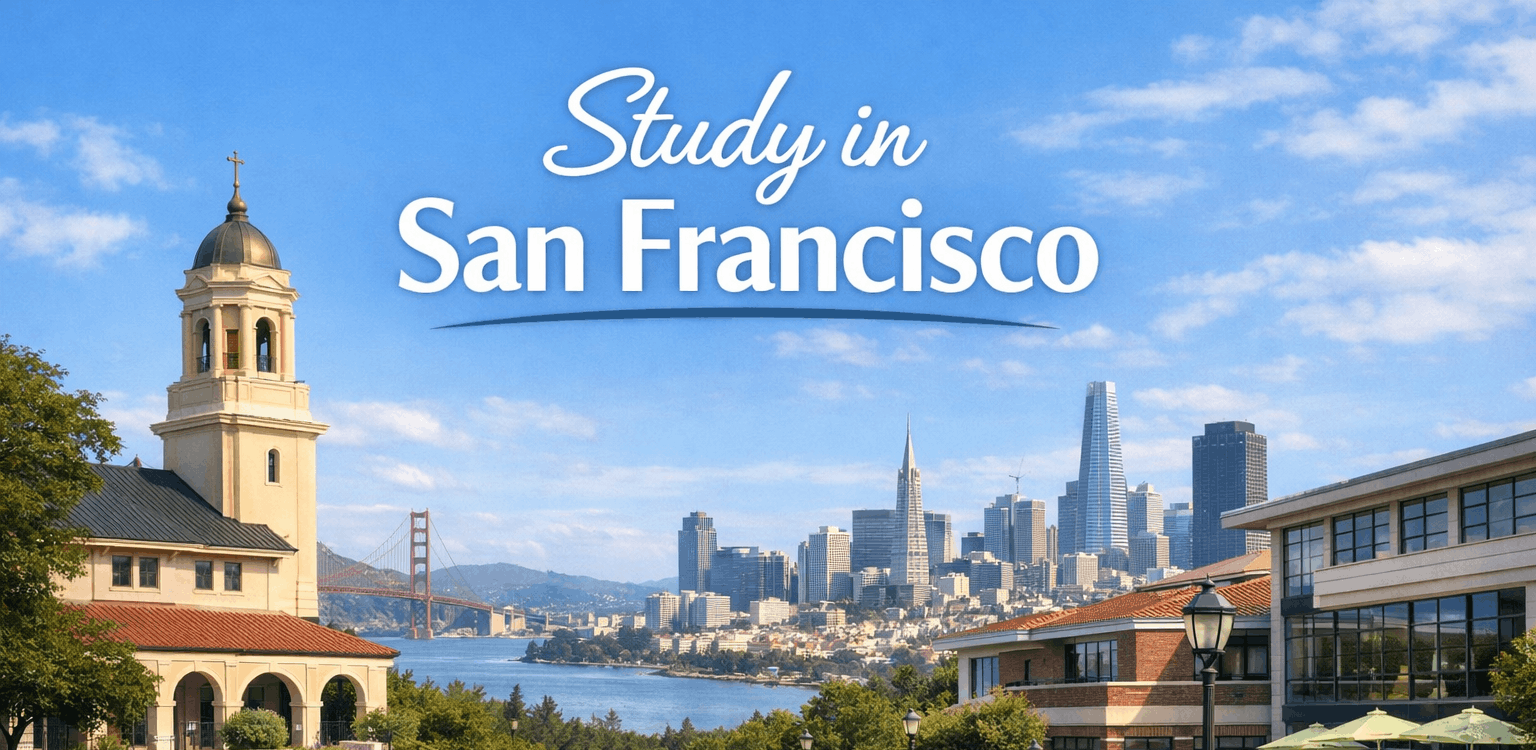
Study in San Francisco to experience one of the world's leading destinations for higher education, technology, and innovation. Home to renowned universities and located close to Silicon Valley, San Francisco offers international students outstanding opportunities in fields such as computer science, business, engineering, data science, and entrepreneurship. The city provides access to internships, research projects, and global employers, making it an attractive choice for career-focused students.
While tuition fees and living costs are higher than in many other US cities, the strong graduate employment prospects and industry connections make the investment worthwhile. Choosing to study in San Francisco means learning in a dynamic, multicultural environment at the heart of global innovation.
Key Highlights: Study in San Francisco
Key Highlights | Details |
Top Universities (In-City) | University of San Francisco (USF), San Francisco State University (SFSU), Golden Gate University |
Top Universities (Nearby Bay Area) | Stanford University, UC Berkeley |
QS World Ranking 2027 Range | #2 (Stanford) to #1201-1400 (USF, SFSU) |
Popular Courses | MBA, MS Business Analytics, MS Computer Science, MS Data Science, Nursing (BSN/DNP) |
Approx. Annual Tuition Fee Range | USD 18,000–90,481 (INR 17.1L–86.1L), depending on university |
Approx. Monthly Living Cost | USD 4,600–5,100 (INR 4.38L–4.86L) |
Cost of Living Rank (Numbeo) | USD 1,586/month excluding rent, single person (July 2026) |
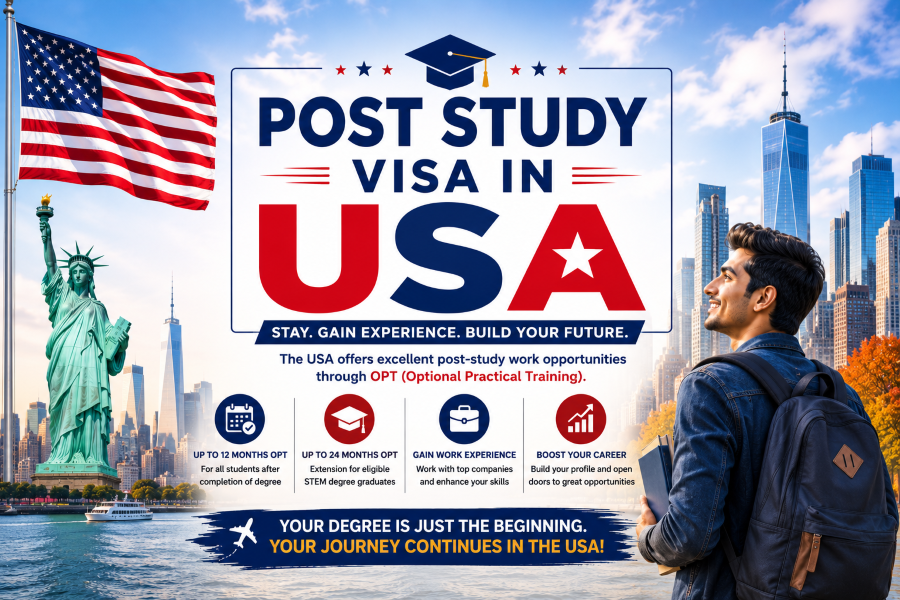
Post-Study Work Option | OPT (12 months) + STEM OPT (24 months, if applicable) |
Career Outcomes | Business Analyst, Software Engineer, Data Analyst, Consultant |
Average Salary Range (San Francisco) | USD 102,735–234,175/year (INR 97.8L–222.9L), role-dependent |
Why Study in San Francisco?
Choosing San Francisco isn't about picking one university, it's about picking an entire ecosystem. The city sits inside the same metro region as Silicon Valley, and that proximity shapes everything from internship access to the actual content of business and computer science courses taught here.
Here are some reasons international students choose San Francisco:
Direct access to Silicon Valley employers, with companies like Apple, Meta, and Uber all recruiting heavily from Bay Area campuses
A genuine choice between small, teaching-focused private universities and large, globally ranked research institutions nearby
Strong graduate outcomes in business, computer science, nursing, and public administration, reflecting the city's dominant industries
A dense, walkable city where public transport genuinely covers most of what students need day to day
Access to the Bay Area's broader academic network, including UC Berkeley and Stanford, both a short transit ride away
The option to stay and work after graduation through Optional Practical Training (OPT), with an extended STEM OPT track for eligible programmes
Top Universities for International Students in San Francisco
San Francisco itself is home to a handful of universities, and two nearby Bay Area institutions, UC Berkeley and Stanford, are commonly included in "study in San Francisco" guides given their proximity, even though they sit just outside city limits.
Rankings here vary sharply. San Francisco's own city-based universities sit well outside the global top 1,000, while the two nearby Bay Area giants rank among the best in the world.
Universities in and Around San Francisco:
University | QS World Ranking 2027 | Location |
Stanford University | #2 | Stanford, roughly 30 miles south of San Francisco |
University of California, Berkeley | #20 | Berkeley, roughly 15 miles across the bay |
University of San Francisco (USF) | #1201-1400 | Within San Francisco city limits |
San Francisco State University (SFSU) | #1201-1400 | Within San Francisco city limits |
Golden Gate University | _ | Within San Francisco, financial district |
Popular Courses to Study in San Francisco
Given the city's economic base, course popularity in San Francisco skews heavily toward business, computer science, and health sciences, with each university carving out its own specific strengths.
1. Business and Management Courses
USF's School of Business and Golden Gate University are both known specifically for business and management postgraduate programmes, with GGU in particular focused almost entirely on business, taxation, and law.
MBA (Master of Business Administration)
MS in Financial Analysis
MS Business Analytics (MSBA)
MS Accountancy (MSA)
MA in Economics
MA in International and Development Economics
2. Computer Science and Technology Courses
Given the city's tech industry gravity, computer science and data-focused programmes are consistently among the most in-demand across San Francisco's universities.
MS in Computer Science
MS in Data Science
MS Business Analytics and Analytics-adjacent tracks
Entrepreneurship-linked business technology programmes, reflecting USF's ranking among the top 25 most entrepreneurial universities in the US, according to Forbes
3. Health Sciences and Nursing Courses
Nursing consistently ranks among the most popular majors at USF specifically, reflecting strong regional demand across the Bay Area's hospital and healthcare networks.
BSN and Master's-level Nursing programmes
DNP (Doctor of Nursing Practice), including Family and Psychiatric Mental Health Nurse Practitioner tracks
Public Health-related graduate programmes
Must check: List of Requirements to Study in USA
Eligibility and Admission Requirements to Study in San Francisco
Admission requirements vary noticeably depending on which university you're targeting, given the wide gap between Stanford and Berkeley's selectivity and the more accessible admissions process at USF or SFSU.
Academic Requirements
Most universities require a recognised bachelor's degree for graduate admission, with GPA expectations shifting sharply based on institutional selectivity.
Highly selective institutions (Stanford, Berkeley): Extremely competitive GPA and standardised test expectations, alongside strong research or professional profiles
Mid-tier private universities (USF): A solid undergraduate GPA, generally in the 3.0/4.0 range for most graduate programmes
Public universities (SFSU): More accessible entry requirements, part of the California State University system
English Language Requirements
International applicants whose first language isn't English need to submit an approved test score, with requirements varying by university and specific programme.
Most universities accept IELTS, TOEFL, or Duolingo English Test scores
Exact minimum scores differ by programme, so it's worth checking each course page directly before applying
Some universities offer conditional admission with English support courses for applicants who fall slightly short
Also check: List of Exams Required to Study in USA in 2026
Cost of Studying in San Francisco
The total cost of studying in San Francisco comes down to tuition, which varies enormously by university type, and living expenses, which run high across the board given the city's overall cost of living.
Official Tuition Fees by University (2026-27):
University | Tuition Details | Annual Cost (USD) |
University of San Francisco (Undergraduate) | Tuition and fees, 2026-27 estimate | USD 62,913 (INR 59.9 lakh) |
University of San Francisco (Graduate, most programmes) | Charged per unit, USD 1,635-1,735/unit | USD 29,430-62,460 (INR 28.0L-59.5L) (programme dependent) |
University of San Francisco (F-1/J-1 Certification of Finances) | First-year total cost of attendance | USD 90,481 (INR 86.1 lakh) |
San Francisco State University (Graduate, base) | California resident base tuition | USD 7,176 (INR 6.8 lakh) |
San Francisco State University (Non-resident/International surcharge) | Additional per-unit charge | USD 471/unit (INR 44,800/unit) |
Note: SFSU's total international graduate cost typically works out to somewhere between USD 18,000 and 25,000 (INR 17.1L-23.8L) a year once the per-unit international surcharge and mandatory campus fees are added to the base tuition, making it considerably more affordable than USF or the Bay Area's larger research universities.
Cost of Living in San Francisco for International Students
San Francisco consistently ranks among the most expensive cities in the US, and Numbeo's most recent data, updated in July 2026, confirms it remains significantly above the national average.
Estimated Monthly Living Cost Breakdown:
Expense Category | Estimated Monthly Cost (USD) | INR Equivalent |
Cost of living, single person, excluding rent | USD 1,586 | INR 1.51 lakh |
1-Bedroom Apartment (general market estimate) | USD 3,000-3,500 | INR 2.86L-3.33L |
Basic Utilities | USD 255 | INR 24,300 |
Groceries | USD 738 | INR 70,300 |
Source: Numbeo
Hence, Approximate Monthly Living Cost (including rent): USD 4,600-5,100 (INR 4.38L-4.86L), and Approximate Annual Living Cost: USD 55,200-61,200 (INR 52.6L-58.3L).
Also check: Cost of Living in USA in 2026
Scholarships to Study in San Francisco
The cost of studying in San Francisco can be significant, but many universities and external organisations offer scholarships to help international students reduce their tuition expenses. Scholarships may be awarded based on academic merit, financial need, leadership, research achievements, or programme-specific criteria.
Scholarship | Offered By | Benefit |
Stanford Knight-Hennessy Scholars | Stanford University | Covers tuition, living expenses, travel allowance, and academic costs for eligible graduate students. |
Stanford Graduate Fellowship (Selected Programmes) | Stanford University | Merit-based funding covering full or partial tuition and a living stipend for eligible programmes. |
University of San Francisco Merit Scholarships | University of San Francisco | Partial tuition scholarships awarded based on academic performance and application strength. |
San Francisco State University Graduate Equity Fellowship | San Francisco State University | Financial assistance for eligible graduate students from underrepresented backgrounds. |
Fulbright Foreign Student Program | U.S. Government | Supports international students with tuition, living expenses, health insurance, and travel costs for eligible programmes. |
Also check: Fully Funded Masters Scholarships in USA for Indian Students in 2026
How to Apply to Study in San Francisco
Applying to study in San Francisco depends heavily on which university you're targeting, since Stanford and Berkeley's application process looks nothing like USF or SFSU's more accessible one. Here's the general path most international students follow.
Step 1: Shortlist Your University and Programme
Compare your options based on ranking tier, tuition, and admission competitiveness:
Highly selective (Stanford, Berkeley): Extremely competitive, plan applications a year in advance
Mid-tier private (USF): More accessible, holistic review process
Public system (SFSU): Part of the California State University system, generally the most affordable entry point
Step 2: Prepare Academic Documents
Every university will need proof of your prior academic standing:
Official transcripts and degree certificates from all previously attended institutions
GPA equivalency documentation, since US universities calculate this on a 4.0 scale
Standardised test scores if required for your specific programme (GRE, GMAT, or SAT depending on level)
Step 3: Submit English Language Test Scores
International applicants whose first language isn't English need to show proficiency:
IELTS, TOEFL, or Duolingo English Test scores, accepted at most San Francisco universities
Exact minimum scores vary by programme, so it's worth checking each course page directly
Step 4: Apply Through the University's Official Portal
Submit your complete application, including any required essays or statements of purpose, directly through the university's admissions system, and pay the non-refundable application fee where applicable.
Step 5: Receive Your I-20 and Apply for Your F-1 Visa
Once admitted and financial proof is confirmed, the university issues your Form I-20, which you'll need to begin your visa application.
Student Visa Requirements for Study in San Francisco
International students admitted to any university in San Francisco need an F-1 Student Visa, issued by the US Department of State. This is the standard visa for all full-time international students enrolled at SEVP-approved US institutions, which includes Stanford, Berkeley, USF, and SFSU.
How the F-1 Visa Process Works:
An F-1 visa application begins once your university issues a Form I-20, confirming your admission and verified financial resources. You'll then pay the SEVIS I-901 fee, complete the DS-160 online form, and schedule a visa interview at your nearest US consulate or embassy.
Eligibility Criteria:
Confirmed admission from a SEVP-approved institution, with a valid Form I-20
Proof of sufficient financial resources to cover tuition and living costs for the first year
Valid passport with sufficient validity beyond your intended stay
Demonstrated intent to return home after completing your studies
No disqualifying immigration or criminal history
Financial Requirements:
Based on official university cost of attendance figures, international students should be prepared to show funds covering their full first-year cost, which for USF runs as high as USD 90,481 (INR 86.1 lakh) including tuition, and considerably lower at SFSU, closer to USD 25,000-30,000 (INR 23.8L-28.6L) once tuition, fees, and living costs are combined.
Documents Required for F-1 Visa:
Valid passport
Form I-20 issued by your university, confirming SEVP approval
Proof of financial resources (bank statements, education loan sanction letter, scholarship letter)
Completed DS-160 online application confirmation page
SEVIS I-901 fee payment receipt
Passport-size photographs meeting US visa specifications
Academic transcripts and standardised test scores
Visa appointment confirmation and any additional documents requested by your consulate
Career Opportunities After Studying in San Francisco
Graduates studying in San Francisco benefit directly from the city's position inside the broader Bay Area tech and finance economy, with salaries running well above the US national average across most business and technical roles.
Top Job Roles and Salary Ranges in San Francisco, CA:
Role | San Francisco Salary Range (USD) | San Francisco Salary Range (INR, approx.) |
Business Analyst | USD 102,735-162,021/year | INR 97.8L-154.3L |
Analyst (general) | USD 105,428-166,721/year | INR 100.4L-158.7L |
Senior Business Analyst | USD 151,375-215,900/year | INR 144.1L-205.5L |
Software Developer | USD 155,000–235,000/year | INR 147.6L–223.8L |
Software Engineer | USD 185,000–285,000/year | INR 176.2L–271.4L |
Source: Glassdoor
Author's POV
The decision to study in San Francisco is about much more than choosing a famous city. While institutions like Stanford and Berkeley enjoy global recognition, they are highly competitive and located outside San Francisco itself. Universities within the city, such as the University of San Francisco and San Francisco State University, offer a different advantage: strong access to employers, internships, and the Bay Area job market.
The biggest reason many students choose to study in San Francisco is the earning potential after graduation. Salaries for roles such as Business Analyst and Software Engineer are among the highest in the United States, helping graduates recover their education costs over time. At the same time, living expenses in San Francisco remain some of the highest in the country, so budgeting is essential. Rather than focusing only on university rankings, compare tuition, industry partnerships, internship opportunities, and career outcomes. The right university is the one that best matches your budget, career goals, and long-term plans.
Connect with our experts for a free 1:1 counseling session to explore course options, career pathways, and more.