Community Colleges in USA
Table of Contents
- Why Choose Community Colleges in USA
- Best Community Colleges in USA for International Students
- Top States for Community Colleges in USA
- Popular Courses at Community Colleges in USA
- Admission Requirements for Community Colleges in USA
- Eligibility Criteria for International Students
- How to Apply to Community Colleges in USA
- Choosing the Right Community College
- Community Colleges in USA with Transfer Agreements
- Cost of Studying at Community Colleges in USA
- Scholarships for Community Colleges in USA
- External Scholarships for International Students
- Student Visa Requirements for Community Colleges in USA
- Working While Studying at Community Colleges in USA
- Part-Time Work Opportunities for Students
- Jobs After Studying at Community Colleges in USA
- Community Colleges vs Universities in USA: Which One Should You Choose?
- Author's Final Thought
Community Colleges in USA offer one of the most affordable pathways to earn a US degree, especially for international students. These two-year institutions provide associate degrees, career-focused certificates, and transfer pathways to top universities while helping students save significantly on tuition and living costs.
If you're planning to study at Community Colleges in USA, here's what you need to know:
Most programs last 2 years, with tuition ranging from USD 6,000–20,000 per year (Approx. ₹5.2–17.4 lakh), making them considerably more affordable than four-year universities.
Community colleges offer Associate Degrees, transfer programs (2+2), certificates, and workforce development programs across business, engineering, IT, healthcare, and hospitality.
Students can transfer to prestigious universities such as UCLA, UC Berkeley, University of Southern California, Arizona State University, and University of Central Florida after completing their first two years.
Admission requirements are generally more flexible than universities, with many colleges accepting students without SAT/ACT scores and offering conditional English language admission.
International students can work on campus during their studies and later become eligible for CPT and OPT, depending on their program and visa eligibility.
Why Choose Community Colleges in USA
Community colleges attract international students for their affordable academic system. Students can begin their higher education journey without the financial burden associated with many universities while still receiving high-quality instruction and opportunities to transfer to leading institutions.
Benefits of Community Colleges in USA
Benefit | Why It Matters |
Affordable Tuition Fees | Tuition can be less than half the cost of public universities, making higher education more accessible. |
Easier Admission Requirements | Many colleges do not require SAT or ACT scores and have flexible GPA requirements. |
Smaller Class Sizes and Personalized Learning | Lower student-to-faculty ratios allow for greater academic support and mentorship. |
Flexible Academic Pathways | Students can pursue associate degrees, certificates, workforce training, or transfer programs. |
Transfer Opportunities to Top Universities | Students can complete two years at a community college before transferring to a university to earn a bachelor's degree. |
Career-Focused Education and Certificates | Programs are designed with employer input and emphasize practical, job-ready skills. |
Best Community Colleges in USA for International Students
Several institutions consistently rank among the best community colleges in USA for international students because of their academic reputation, transfer success rates, international student support and affordable tuition.
Best Community Colleges in USA
Community College | Known For | Popular Transfer Universities |
Santa Monica College | Highest transfer rate in California | UCLA, UC Berkeley, USC |
De Anza College | STEM and engineering | UC System, San Jose State |
Valencia College | Direct Connect Program | University of Central Florida |
Foothill College | Computer Science | Stanford pathways, UC System |
Green River College | International students | University of Washington |
Seattle Colleges | Technology programs | Seattle University, UW |
Northern Virginia Community College | Business and IT | George Mason University |
College of DuPage | Business and Healthcare | University of Illinois |
Top States for Community Colleges in USA
The quality and availability of community colleges differ across states. Some states have built extensive transfer systems connecting community colleges directly with public universities.
Best States for Community Colleges
State | Why to Choose | Notable Colleges |
California | Largest community college system with excellent UC and CSU transfer pathways | Santa Monica College, De Anza College, Foothill College |
Washington | Strong technology ecosystem and international student support | Green River College, Seattle Colleges |
Florida | Affordable education with Direct Connect transfer agreements | Valencia College |
Virginia | Excellent business and IT programs | Northern Virginia Community College |
Illinois | Diverse technical and healthcare programs | College of DuPage |
Texas | Affordable tuition and growing employment market | Houston Community College, Austin Community College |
Popular Courses at Community Colleges in USA
Community colleges offer hundreds of career-oriented programs aligned with current industry demands. Many courses are designed for immediate employment, while others serve as transfer pathways into bachelor's degree programs.
Popular Courses Offered
Course | Duration | Career Pathways |
Business Administration | 2 Years | Business, Marketing, Management |
Computer Science & IT | 2 Years | Software Development, IT Support |
Engineering | 2 Years | Mechanical, Civil, Electrical Engineering |
Nursing & Allied Health | 2 Years | Nursing, Medical Laboratory Technology |
Data Science & Analytics | 2 Years | Data Analyst, BI Analyst |
Cybersecurity | 2 Years | Security Analyst, SOC Analyst |
Hospitality & Tourism | 2 Years | Hotel Management, Tourism |
Graphic Design & Digital Media | 2 Years | UI/UX Design, Multimedia Design |
Business Administration
Business Administration is the most popular transfer programs because it builds a strong foundation in management, accounting, economics, finance and marketing before students continue toward a bachelor's degree.
Core Subjects | Career Opportunities |
Accounting | Financial Analyst |
Marketing | Marketing Executive |
Economics | Business Consultant |
Finance | Investment Analyst |
Management | Operations Coordinator |
Computer Science and Information Technology
Computer Science programs introduce students to programming, software development, networking, databases, and cloud computing, making them highly transferable into four-year STEM degrees.
Core Subjects | Career Opportunities |
Programming | Software Developer |
Database Systems | Database Administrator |
Networking | Network Engineer |
Cybersecurity Basics | Security Analyst |
Cloud Computing | Cloud Support Engineer |
Engineering
Engineering transfer programs cover foundational mathematics, physics, mechanics, electronics, and design before students transfer into bachelor's engineering programs.
Engineering Area | Typical Transfer Degree |
Civil Engineering | BS Civil Engineering |
Mechanical Engineering | BS Mechanical Engineering |
Electrical Engineering | BS Electrical Engineering |
Computer Engineering | BS Computer Engineering |
Nursing and Allied Health
Healthcare programs prepare students for clinical and laboratory careers through classroom instruction and practical training.
Popular Programs | Career Path |
Nursing | Registered Nurse |
Medical Assisting | Medical Assistant |
Radiologic Technology | Radiology Technologist |
Dental Hygiene | Dental Hygienist |
Data Science and Analytics
Students develop analytical skills using statistics, programming, data visualization, and business intelligence tools.
Core Skills | Job Roles |
Python | Data Analyst |
SQL | BI Analyst |
Tableau | Reporting Analyst |
Statistics | Data Scientist (after bachelor's) |
Cybersecurity
Cybersecurity programs teach students how to protect digital systems against cyber threats through practical security training.
Skills Learned | Career Path |
Ethical Hacking | Security Analyst |
Network Security | SOC Analyst |
Risk Management | Compliance Analyst |
Hospitality and Tourism Management
Students learn hospitality operations, hotel management, customer service, tourism planning, and event management.
Subjects | Career Opportunities |
Hotel Operations | Hotel Supervisor |
Tourism Management | Tourism Coordinator |
Event Management | Event Planner |
Graphic Design and Digital Media
Creative programs combine design principles with modern multimedia technologies.
Skills | Careers |
Adobe Creative Suite | Graphic Designer |
UI/UX Design | UX Designer |
Motion Graphics | Multimedia Designer |
Branding | Creative Executive |
Admission Requirements for Community Colleges in USA
Compared to four-year universities, Community Colleges in USA have accessible admission requirements, making them an excellent option for international students. While exact criteria vary by institution, applicants are primarily evaluated on their academic qualifications, English language proficiency, and supporting documents rather than standardized entrance examinations.
Academic Requirements
Most community colleges admit students who have completed secondary education or an equivalent qualification in their home country.
Academic Eligibility
Requirement | Details |
Minimum Qualification | Completion of Grade 12 or equivalent secondary education |
Minimum Percentage | 50–60% or above (varies by institution) |
Entrance Exam | SAT/ACT usually not required |
Stream Restrictions | Most colleges accept students from all academic streams, depending on the program |
Academic Transcripts | Official transcripts from previous institutions are mandatory |
Note: Competitive programs such as Nursing, Engineering, or Allied Health Sciences may require prerequisite subjects and higher academic scores.
English Language Requirements
Since most programs are delivered in English, international students must demonstrate language proficiency unless they qualify for an exemption.
Accepted English Language Tests
Test | Minimum Score (Typical) |
IELTS Academic | 5.5–6.5 |
TOEFL iBT | 61–80 |
PTE Academic | 45–58 |
Duolingo English Test | 90–110 (accepted by selected colleges) |
Many institutions also offer Conditional Admission, allowing students to complete English as a Second Language (ESL) courses before beginning their academic program.
Documents Required for Admission
Applicants should prepare all required documents before submitting applications to avoid delays during the admission process.
Required Documents
Document | Purpose |
Completed Application Form | Official admission request |
Academic Transcripts | Proof of previous education |
Passport Copy | Identity verification |
English Language Test Score | Demonstrates language proficiency |
Statement of Purpose (if required) | Explains academic goals |
Financial Documents | Required for visa processing |
Letters of Recommendation (selected programs) | Academic or professional references |
Eligibility Criteria for International Students
International applicants must satisfy both institutional admission requirements and US immigration regulations.
Eligibility Requirement | Requirement |
Educational Qualification | Equivalent of US high school diploma |
Valid Passport | Mandatory |
English Language Proficiency | Required unless exempt |
Financial Capability | Proof of sufficient funds for tuition and living expenses |
Student Visa Eligibility | Must qualify for an F-1 Student Visa |
How to Apply to Community Colleges in USA
Applying to Community Colleges in USA is generally straightforward and significantly less competitive than applying to universities. Most colleges accept online applications throughout multiple admission cycles and provide dedicated support for international applicants.
Step-by-Step Application Process
Step | What You Need to Do |
Step 1 | Research colleges based on your preferred course, tuition, location, and transfer opportunities. |
Step 2 | Check admission requirements, English language scores, and application deadlines. |
Step 3 | Prepare documents including transcripts, passport, English test scores, and financial statements. |
Step 4 | Submit the online application through the college admission portal. |
Step 5 | Pay the application fee (if applicable). |
Step 6 | Receive the admission decision and Letter of Acceptance. |
Step 7 | Obtain the Form I-20 from the college after confirming enrollment. |
Step 8 | Apply for the US F-1 Student Visa. |
Step 9 | Arrange accommodation, health insurance, and travel before departure. |
Choosing the Right Community College
Selecting the right institution requires evaluating several academic and practical factors rather than focusing solely on tuition fees.
Factors to Consider
Factor | Why It Matters |
Accreditation | Ensures degree recognition and transferability |
Transfer Partnerships | Facilitates admission into four-year universities |
Course Availability | Confirms your preferred program is offered |
Tuition Fees | Helps manage overall education costs |
Campus Location | Influences living expenses and internship opportunities |
Graduate Outcomes | Indicates employment and transfer success |
Common Application Mistakes to Avoid
Avoiding common mistakes can significantly improve your admission experience.
Common Mistake | How to Avoid It |
Missing deadlines | Track all important dates using a calendar |
Incorrect transcripts | Submit official, certified academic records |
Weak financial documentation | Prepare updated bank statements and sponsorship documents |
Applying without checking transfer agreements | Verify future bachelor's transfer options |
Ignoring English score requirements | Meet or exceed minimum language requirements |
Community Colleges in USA with Transfer Agreements
One of the biggest advantages of studying at a community college is the opportunity to transfer into a prestigious four-year university after completing an associate degree.
What Are Transfer Agreements?
Transfer agreements are formal partnerships between community colleges and universities that allow students to transfer previously earned academic credits toward a bachelor's degree.
These agreements simplify the admission process while reducing both tuition costs and the total time required to complete a university education.
2+2 Transfer Programs Explained
The 2+2 pathway allows students to complete:
First 2 years at a community college
Final 2 years at a university
Graduates receive the same bachelor's degree awarded to students who studied all four years at the university.
Benefits of the 2+2 Model
Benefit | Advantage |
Lower Tuition Costs | Significant savings during the first two years |
Smaller Classes | Better academic support |
Easier Admission | More accessible entry into US higher education |
University Degree | Graduate with a bachelor's degree from the transfer university |
Community Colleges That Transfer Students to Top Universities
Many Community Colleges in USA maintain excellent transfer relationships with leading universities.
Community College | Major Transfer Universities |
Santa Monica College | UCLA, UC Berkeley, USC |
De Anza College | UC Berkeley, UC Davis, San Jose State University |
Foothill College | UC System, Stanford pathway programs |
Valencia College | University of Central Florida |
Green River College | University of Washington, Washington State University |
Northern Virginia Community College | George Mason University |
Seattle Colleges | University of Washington, Seattle University |
Transfer Success Rates and Opportunities
Students who maintain strong academic performance often enjoy excellent transfer outcomes.
Transfer Success Snapshot
Indicator | Typical Outcome |
Minimum GPA for Transfer | 2.5–3.5 depending on university |
Transfer Credits Accepted | Up to 60 semester credits |
Bachelor's Completion | Additional 2 years after transfer |
Popular Transfer Fields | Business, Engineering, Computer Science, Healthcare |
Tip: Students planning to transfer should work closely with academic advisors from their first semester to ensure all selected courses satisfy future university requirements.
Cost of Studying at Community Colleges in USA
One of the primary reasons international students choose community colleges is affordability. Even after considering tuition, accommodation, transportation, insurance, and daily expenses, the overall cost remains substantially lower than attending most US universities.
Tuition Fees at Community Colleges
Institution Type | Average Annual Tuition |
Community Colleges | USD 6,000–20,000 (Approx. ₹5.2–17.4 lakh) |
Public Universities | USD 25,000–40,000 (Approx. ₹21.8–34.8 lakh) |
Private Universities | USD 35,000–60,000+ (Approx. ₹30.5–52.2 lakh+) |
Cost of Living in the USA
Living expenses depend largely on the state, city, and personal lifestyle.
Expense | Estimated Annual Cost |
Accommodation | USD 6,000–12,000 (Approx. ₹5.2–10.4 lakh) |
Food | USD 3,000–5,000 (Approx. ₹2.6–4.3 lakh) |
Transportation | USD 800–1,500 (Approx. ₹70,000–1.3 lakh) |
Health Insurance | USD 800–2,000 (Approx. ₹70,000–1.7 lakh) |
Miscellaneous | USD 2,000–4,000 (Approx. ₹1.7–3.5 lakh) |
Total Cost of Attendance
Expense Category | Estimated Annual Cost |
Tuition Fees | USD 6,000–20,000 |
Living Expenses | USD 12,000–22,000 |
Total Estimated Cost | USD 18,000–42,000 (Approx. ₹15.7–36.5 lakh) |
Scholarships for Community Colleges in USA
Although community colleges are already among the most affordable higher education institutions in the United States, many colleges and external organizations provide scholarships that help international students further reduce their education expenses.
Unlike universities, community colleges may have fewer full scholarships, but merit awards, institutional grants, and private funding opportunities are widely available.
Merit-Based Scholarships
Merit scholarships reward students with strong academic performance, leadership experience, extracurricular achievements, or community service.
Scholarship Type | Eligibility | Typical Award |
Academic Excellence Scholarship | High GPA and strong academic performance | USD 500–5,000 (Approx. ₹43,000–4.35 lakh) |
Leadership Scholarship | Leadership roles and extracurricular achievements | USD 500–3,000 (Approx. ₹43,000–2.6 lakh) |
Dean's Scholarship | Outstanding first-year applicants | Varies by institution |
Honors Program Scholarship | Students enrolled in honors programs | Partial tuition assistance |
Need-Based Scholarships
Several colleges offer financial assistance to students demonstrating financial need, although these are generally more limited for international students.
Scholarship | Description |
Institutional Need-Based Aid | Offered by selected community colleges based on financial documentation |
Emergency Student Grants | Supports students facing temporary financial hardship |
Tuition Assistance Programs | Partial tuition waivers for eligible students |
International Student Scholarships
Many colleges actively encourage international enrollment by providing scholarships specifically for overseas students.
Scholarship | Offered By | Benefit |
International Student Scholarship | Individual community colleges | Partial tuition waiver |
Global Student Scholarship | Selected colleges | Merit-based financial support |
Diversity Scholarship | Colleges promoting multicultural enrollment | Tuition assistance |
State and Institutional Grants
Certain states and institutions provide grants that reduce tuition costs for eligible students.
Grant Type | Availability |
Institutional Grants | Available at participating colleges |
State Educational Grants | Limited availability depending on residency rules |
Program-Specific Grants | Offered for healthcare, STEM, and workforce programs |
External Scholarships for International Students
Students should also explore scholarships offered by governments, private organizations, and international education foundations.
Scholarship | Provider |
Fulbright Foreign Student Program | US Government |
EducationUSA Scholarships | EducationUSA Advising Centers |
Inlaks Scholarship | Inlaks Shivdasani Foundation |
JN Tata Endowment Loan Scholarship | JN Tata Endowment |
Aga Khan Foundation Scholarship | Aga Khan Foundation |
Tip: Since community college tuition is already comparatively affordable, combining institutional scholarships with part-time employment often makes studying in the USA financially manageable.
Student Visa Requirements for Community Colleges in USA
International students admitted to community colleges require an F-1 Student Visa to study in the United States.
After receiving admission, colleges issue Form I-20, which is required for the student visa application.
F-1 Student Visa Requirements
Requirement | Details |
Admission Letter | Offer of admission from a SEVP-approved community college |
Form I-20 | Issued after confirming admission |
Valid Passport | Must remain valid throughout study period |
Financial Proof | Demonstrate sufficient funds for tuition and living expenses |
SEVIS Registration | Mandatory before visa interview |
Financial Proof Requirements
Applicants must demonstrate adequate financial resources to cover education and living expenses.
Expense Covered | Required Evidence |
Tuition Fees | Bank statements or sponsorship letters |
Living Expenses | Savings or financial sponsorship |
Emergency Funds | Additional financial reserves are recommended |
SEVIS Fee and Application Process
Step | Description |
Receive Form I-20 | From the admitted community college |
Pay SEVIS Fee | Mandatory payment before visa interview |
Complete DS-160 | Online visa application form |
Schedule Visa Interview | At the US Embassy or Consulate |
Attend Interview | Carry all academic and financial documents |
Visa Interview Tips for International Students
Tip | Reason |
Explain your study plan clearly | Demonstrates genuine academic intent |
Carry complete financial documents | Confirms your ability to fund studies |
Understand your chosen program | Shows preparation and seriousness |
Explain future career plans | Supports non-immigrant intent required for F-1 visas |
Working While Studying at Community Colleges in USA
International students studying under an F-1 visa have limited work opportunities during their academic program. These opportunities help students gain valuable professional experience while offsetting part of their living expenses.
On-Campus Employment Opportunities
Students may work up to 20 hours per week during academic sessions and full-time during official vacations.
Typical Jobs | Skills Gained |
Library Assistant | Communication, organization |
Student Ambassador | Leadership, public speaking |
IT Help Desk | Technical support |
Administrative Assistant | Office administration |
Research Assistant | Academic and analytical skills |
CPT (Curricular Practical Training)
Curricular Practical Training allows students to participate in internships that are directly related to their academic program before graduation.
Feature | Details |
Eligibility | After completing one academic year (in most cases) |
Work Type | Internship related to curriculum |
Authorization | Approved by the college's international office |
Duration | Depends on academic program |
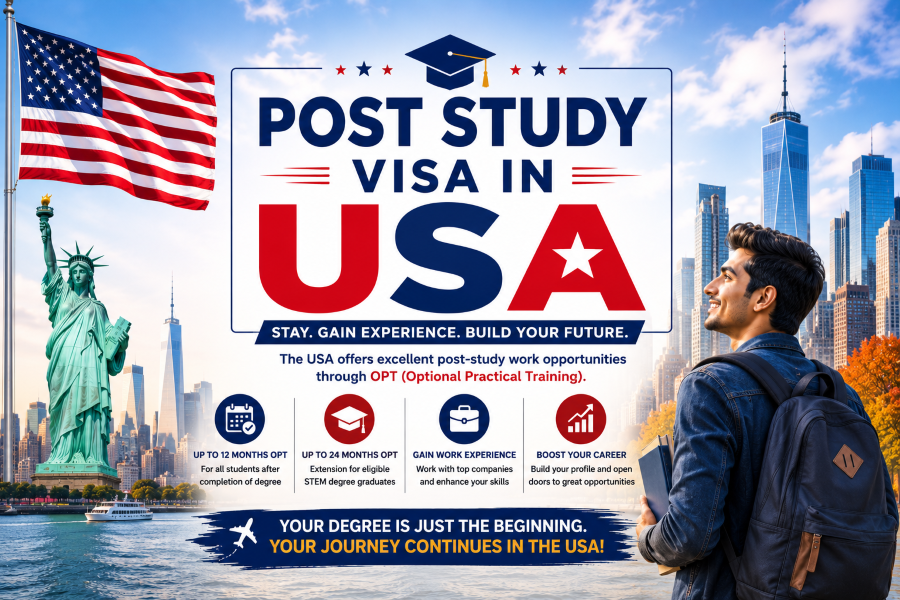
OPT (Optional Practical Training)
OPT enables international students to gain professional work experience after completing their studies.
Feature | Details |
Standard OPT | Up to 12 months |
STEM OPT Extension | Additional 24 months (eligible STEM bachelor's degrees after transfer) |
Employment Area | Must relate to field of study |
Part-Time Work Opportunities for Students
Employment Type | Availability |
On-campus jobs | Permitted |
Off-campus employment | Restricted unless authorized through CPT/OPT or special circumstances |
Internships | Available through academic programs |
Jobs After Studying at Community Colleges in USA
Many graduates either continue toward a bachelor's degree or begin careers in technical and applied fields.
Students completing transfer programs often earn bachelor's degrees before entering the job market, while certificate graduates may find employment immediately.
Popular Career Options
Program | Common Job Roles |
Business Administration | Administrative Assistant, Sales Coordinator, Business Support Executive |
Computer Science | IT Support Specialist, Junior Software Developer |
Engineering | Engineering Technician |
Nursing | Licensed Practical Nurse (depending on licensing pathway) |
Cybersecurity | Junior Security Analyst |
Data Analytics | Data Technician, BI Assistant |
Hospitality | Hotel Operations Associate |
Graphic Design | Graphic Designer |
Note: Salary levels depend on the final qualification earned. Students transferring to bachelor's programs generally access significantly broader career opportunities and higher earning potential.
Community Colleges vs Universities in USA: Which One Should You Choose?
Choosing between a community college and a university depends on your academic goals, financial situation, and preferred learning environment.
Factor | Community Colleges | Universities |
Tuition | Lower | Higher |
Admission | More flexible | More competitive |
Class Size | Smaller | Larger |
Research Opportunities | Limited | Extensive |
Degree Offered | Associate Degree, Certificates | Bachelor's, Master's, PhD |
Transfer Option | Excellent 2+2 pathways | Not applicable |
Campus Life | Limited | Comprehensive |
If your priority is affordability and eventually earning a bachelor's degree from a prestigious university, community colleges provide one of the strongest education pathways available.
Author's Final Thought
Community Colleges in USA continue to be one of the smartest choices for students seeking affordable, flexible, and career-focused education. They not only reduce the overall cost of earning a US degree but also provide structured transfer pathways into some of the country's top universities.
Before selecting a college, carefully evaluate transfer agreements, course offerings, graduate outcomes, campus support services, and living costs. Planning these factors early can significantly improve your educational experience and future career prospects in the United States. Book a 1:1 free counselling session with us.
Frequently Asked Questions
A community college is a public two-year institution that offers associate degrees, certificates, vocational education, and transfer programs leading to bachelor's degrees at four-year universities.
Yes. Community colleges generally charge significantly lower tuition fees than public and private universities, making them one of the most affordable higher education options for international students.
Yes. International students are welcome at SEVP-approved community colleges and can apply for an F-1 Student Visa after receiving their admission and Form I-20.
Several institutions such as Santa Monica College, De Anza College, Green River College, and Valencia College are known for offering affordable tuition alongside excellent transfer opportunities.
Completely free community colleges are generally not available for international students. However, scholarships, tuition waivers, and institutional grants can substantially reduce overall costs.
Yes. Many community colleges have formal transfer agreements with universities, allowing students to complete two years at a community college before transferring to earn a bachelor's degree.
Most associate degree programs require approximately two years of full-time study, while certificate programs may take anywhere between a few months and one year.
Most community colleges do not require SAT or ACT scores for admission, making the application process more accessible for international students.
Graduates can either transfer to a four-year university to complete a bachelor's degree or enter the workforce through career-oriented certificate and associate degree programs.
Yes. Associate degrees and certificates from accredited community colleges are widely recognized, particularly when transferring into bachelor's degree programs at accredited universities.
Graduates can either transfer to a four-year university to complete a bachelor's degree or enter the workforce through career-oriented certificate and associate degree programs.