Bachelors in USA
Table of Contents
- Why Choose Bachelors in USA
- Education System for Bachelors in USA
- Top Universities for Bachelors in USA
- Acceptance Rate for Bachelors in USA Universities
- Popular Courses for Bachelors in USA
- Admission Requirements for Bachelors in USA
- Eligibility Criteria for Bachelors in USA
- Student Visa for Bachelors in USA
- Cost of Studying Bachelors in USA
- Cost of Living for Bachelors in USA
- Scholarships for Bachelors in USA
- Intakes for Bachelors in USA
- How to Apply for Bachelors in USA
- Job Opportunities After Bachelors in USA
- Conclusion
Pursuing a Bachelors in USA for Indian Students in 2026 offers an incredible pathway to world-class education. An American undergraduate degree typically requires four years of full-time study to earn 120-128 credits. The system is highly flexible, allowing students to explore electives before declaring a major, such as a B.A. or a B.S. in STEM. While annual tuition varies widely ranging from $20,000 (₹1,890,800) to $40,000 (₹3,781,600) at public schools to $65,000+ (₹6,145,100+) at private institutions, remains a life-changing investment.
The table below provides a quick overview of Bachelors in USA for international students.
Particulars | Details |
Degree Level | Undergraduate |
Duration | 4 Years |
Credits Required | 120–130 Credits |
Approximate Annual Tuition Fees | USD 15,000–$65,000 (₹1,418,100 – ₹6,145,100 INR) |
Approximate Annual Living Cost | USD 12,000–$25,000 (₹1,134,480 – ₹2,363,500 INR) |
Post-Study Work Option | OPT and STEM OPT Extensions |
English Language Tests | IELTS, TOEFL, PTE, Duolingo |
Why Choose Bachelors in USA
Enrolling in a bachelor's program in the United States offers Indian students an unmatched combination of academic excellence and personal development. American universities focus heavily on innovative learning methodologies, critical thinking, and practical exposure through corporate partnerships. This flexible approach empowers students to explore diverse interests before fully dedicating themselves to a specific career path, making it a highly preferred destination for ambitious global learners.
Globally Ranked Institutions: Access to Ivy League schools and leading public research universities that dominate global academic rankings.
Academic Flexibility: The freedom to explore elective courses and interdisciplinary programs before declaring an official major.
Research and Innovation: Opportunities to participate in groundbreaking, faculty-led research projects during undergraduate years.
Career Growth: Comprehensive industry exposure through internships, cooperative education programs, and corporate networking fairs.
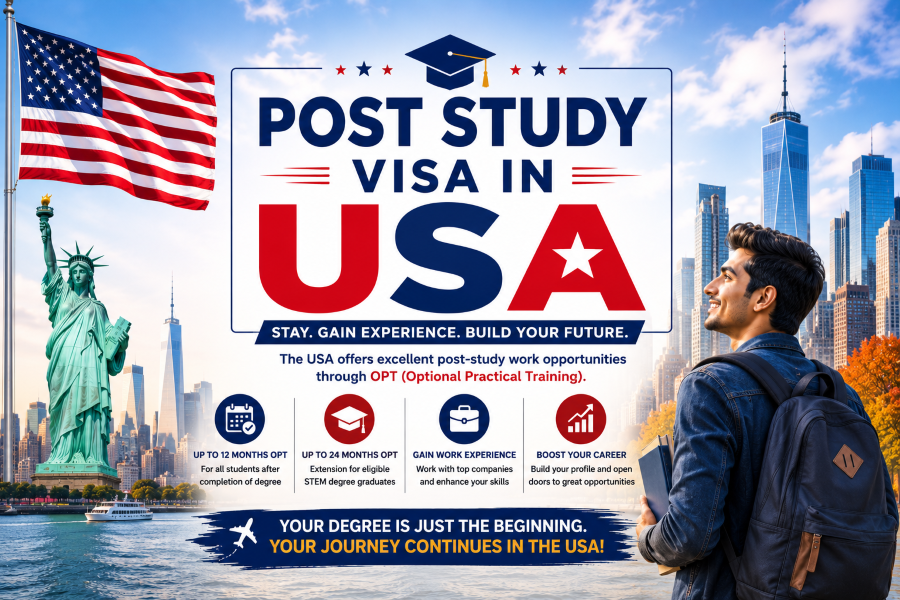
Post-Study Work Rights: Access to Optional Practical Training (OPT) allowing up to 3 years of legal employment for STEM graduates.
Education System for Bachelors in USA
The undergraduate education system offers best courses in USA which is structured to offer holistic development rather than just rote learning. It encourages active classroom participation, regular assignments, and collaborative projects that prepare students for real-world professional challenges. This multi-layered learning system makes American degree holders highly competitive in the global employment market and provides extensive personal growth.
Broad Curriculum: Students benefit from a liberal arts foundation that builds essential critical thinking skills.
Continuous Assessment: Grading is based on participation, quizzes, and projects, rather than just final exams.
Major Declaration: Students typically declare their primary specialization at the end of their second year.
Academic Advising: Dedicated counselors guide students through course selection and long-term career planning.
Extracurricular Integration: Strong emphasis is consistently placed on sports, arts, and student organizations.
Education Structure for Bachelors in USA
The US undergraduate blueprint balances foundational interdisciplinary education with specialized major coursework over a standard four-year timeframe. This balanced methodology ensures students receive a well-rounded academic foundation before specializing.
The table below explains the typical structure of an undergraduate degree.
Academic Component | Description |
General Education | Core mandatory courses across humanities, sciences, and arts during the first two years. |
Major Courses | Specialized, advanced subject knowledge tailored directly to your primary chosen discipline. |
Electives | Highly flexible course selections allowing students to explore unrelated personal interests. |
Internships/Projects | Practical, hands-on learning experiences coordinated with industry partners for academic credit. |
Capstone Project | A comprehensive final-year academic project demonstrating mastery over the student's core major. |
Credit System and GPA for Bachelors in USA
The academic progression of US undergraduate programs relies entirely on accumulating modular credit hours and maintaining a strong cumulative Grade Point Average (GPA). Universities typically require between 120 and 130 credits to graduate successfully.
The table below outlines the standard US university grading scale.
GPA | Academic Standing |
3.7–4.0 | Excellent performance reflecting absolute mastery of the subject matter. |
3.3–3.69 | Very Good standing with consistent academic quality across semesters. |
3.0–3.29 | Good performance meeting all standard collegiate benchmarks comfortably. |
2.0–2.99 | Satisfactory standing showing basic understanding but needing improvement. |
Below 2.0 | Academic Concern requiring immediate intervention or probationary review. |
Top Universities for Bachelors in USA
There are many prestigious universities in USA globally, recognized for producing industry leaders, innovators, and Nobel laureates. Indian students looking to join these high-tier institutions will benefit from vast alumni networks, well-funded research facilities, and global career placement pipelines. Selecting the right institution depends heavily on academic goals, preferred majors, and localized financial parameters.
Elite Academic Standards: Consistently top-ranked institutions providing rigorous learning environments.
Extensive Global Networks: Strong alumni connections that facilitate top-tier international mentoring and hiring.
Generous Financial Backing: Massive institutional endowments that support needy international students via financial aid.
Cutting-Edge Infrastructure: State-of-the-art laboratories, libraries, and tech-driven campuses.
High Employability Rates: Direct recruitment pathways into Fortune 500 corporations and global institutions.
The table below highlights top universities for undergraduate studies alongside their estimated tuition.
University | QS World University Rankings 2027 | Approximate Annual Tuition Fees |
Massachusetts Institute of Technology (MIT) | #1 | USD 61,000–$65,000 (₹5,766,940 – ₹6,145,100 INR) |
Stanford University | #2 | USD 62,000–$67,000 (₹5,861,480 – ₹6,334,180 INR) |
Harvard University | #5 | USD 59,000–$64,000 (₹5,577,860 – ₹6,050,560 INR) |
California Institute of Technology (Caltech) | #7 | USD 60,000–$65,000 (₹5,672,400 – ₹6,145,100 INR) |
University of Pennsylvania | #15 | USD 58,000–$65,000 (₹5,483,320 – ₹6,145,100 INR) |
Cornell University | #16 | USD 58,000–$64,000 (₹5,483,320 – ₹6,050,560 INR) |
Yale University | #16 | USD 59,000–$63,000 (₹5,577,860 – ₹5,956,020 INR) |
Johns Hopkins University | #20 | USD 60,000–$65,000 (₹5,672,400 – ₹6,145,100 INR) |
University of California, Berkeley (UCB) | #20 | USD 45,000–$50,000 (₹4,254,300 – ₹4,727,000 INR) |
University of Chicago | #24 | USD 58,000–$63,000 (₹5,483,320 – ₹5,956,020 INR) |
Acceptance Rate for Bachelors in USA Universities
Securing admission to an American institution requires navigating varying levels of institutional selectivity across different states. Highly competitive universities evaluate profiles holistically, checking achievements beyond basic grade metrics, whereas public state universities offer broader access. Understanding these distinct tiers helps applicants build a strategic and realistic application portfolio.
Holistic Admission Assessment: Elite universities reject perfect scorers if they lack distinct leadership or extracurricular depth.
Public University Accessibility: Large state systems maintain higher acceptance caps to foster a large student community.
Early Action Advantages: Applying through Early Decision/Action timelines generally yields higher acceptance probabilities.
Profile-Matching Strategies: Successful candidates apply to a balanced mix of dream, reach, and safe schools.
Evolving Standardized Testing: Many campuses remain test-optional or test-blind, placing higher emphasis on GPA.
The table below categorizes universities based on admission competitiveness tiers.
Category | Approximate Acceptance Rate | Universities |
Highly Competitive | Below 10% | Harvard, Stanford, MIT |
Moderately Competitive | 10%–30% | Cornell, University of Chicago |
Relatively Accessible | Above 40% | Arizona State University, University of Kansas |
Broadly Accessible | Above 60% | University of Texas (Arlington), Kent State University |
Open Access Tiers | Above 80% | Selected Regional Public Institutions & Community Colleges |
Popular Courses for Bachelors in USA
American undergraduate institutions offer thousands of course specializations that adapt swiftly to global market developments. Whether a student wants to dive into technical fields, financial management, or emerging healthcare tracks, the US provides deep academic modules. These tailored programs are explicitly designed to maximize industry readiness upon graduation.
STEM Advantages: Science, technology, engineering, and mathematics majors offer extended post-study work periods.
Interdisciplinary Combinations: Options to combine contrasting fields, like a Computer Science major with a Finance minor.
Industry Integration: Curriculums updated regularly in collaboration with tech giants and global banks.
Practical Learning Mandates: Heavy incorporation of lab work, market simulations, and case studies.
Lucrative Starting Roles: Top-tier disciplines command exceptional entry-level remuneration packages globally.
The table below highlights some of the most popular undergraduate courses.
Course | Popular Specializations | Approximate Tuition Fees |
Computer Science | AI, Data Science, Cybersecurity | USD 25,000–$65,000 (₹2,363,500 – ₹6,145,100 INR) |
Engineering | Mechanical, Civil, Electrical | USD 25,000–$60,000 (₹2,363,500 – ₹5,672,400 INR) |
Business Administration | Finance, Marketing, Management | USD 20,000–$60,000 (₹1,890,800 – ₹5,672,400 INR) |
Healthcare Sciences | Public Health, Biomedical Sciences | USD 25,000–$55,000 (₹2,363,500 – ₹5,199,700 INR) |
Economics | Applied Economics, International Economics | USD 20,000–$55,000 (₹1,890,800 – ₹5,199,700 INR) |
Admission Requirements for Bachelors in USA
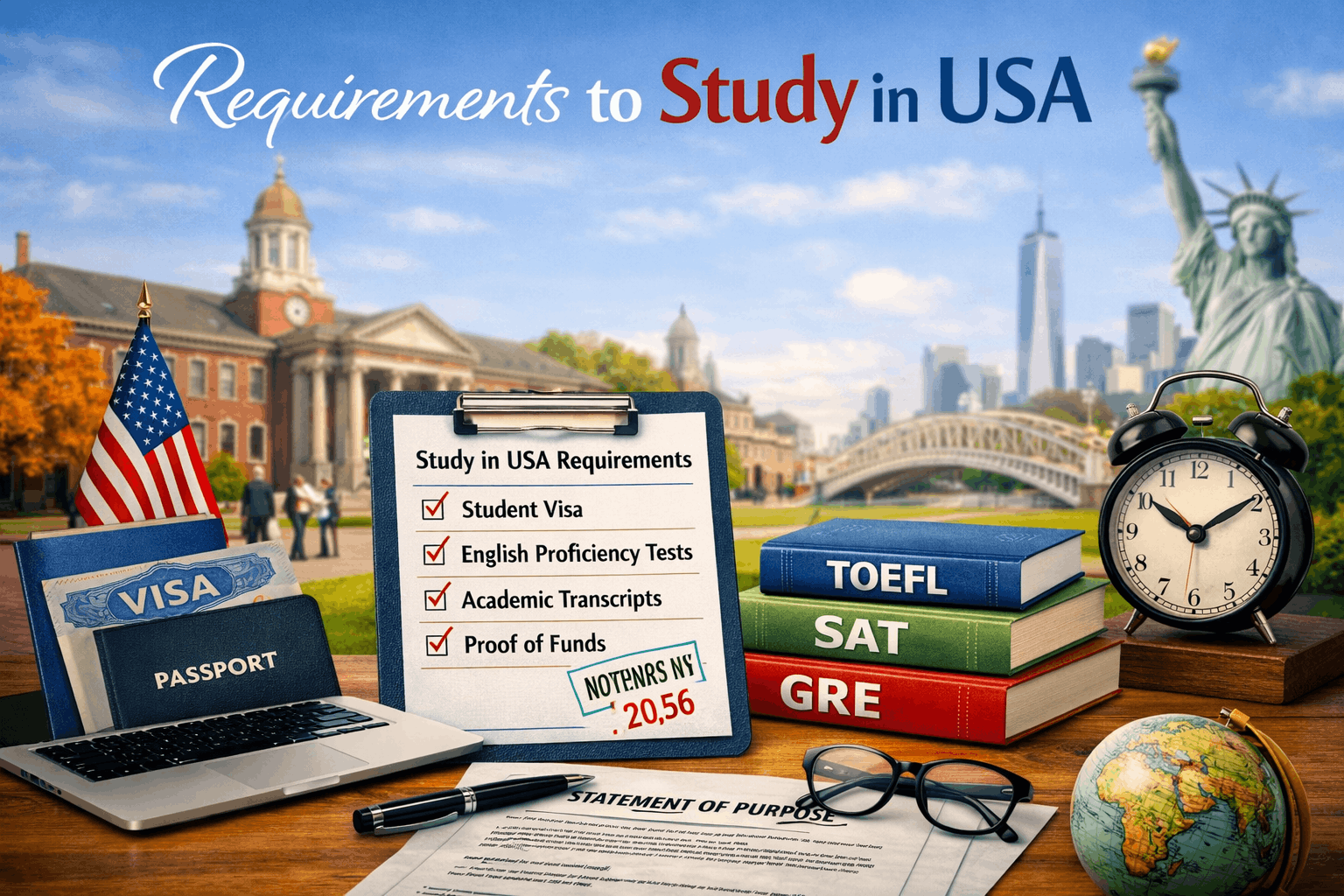
Navigating the US admission process requires careful attention to specific entry requirements, academic milestones, and language criteria. American universities evaluate a student's total profile, ensuring that chosen candidates possess the drive, leadership qualities, and academic stamina required to thrive. Preparation should begin at least a year in advance to ensure competitiveness.
Academic Consistency: Universities look for strong grade trends from Class 9 through Class 12.
Standardized Testing: Though optional at many schools, competitive SAT or ACT scores can boost chances.
English Proficiency: Mandatory IELTS, TOEFL, or Duolingo scores are required for non-native speakers.
Extracurricular Depth: Meaningful involvement in activities rather than just passive participation is highly valued.
Compelling Essays: Personal statements must uniquely showcase the applicant's motivations and worldview.
Eligibility Criteria for Bachelors in USA
Eligible undergraduate candidates must fulfill foundational educational benchmarks and satisfy primary language verification protocols. Institutions will assess these core factors strictly before reviewing supplemental materials.
The table below outlines the core baseline requirements for international applicants.
Requirement | Details |
Academic Qualification | Successful completion of Class 12 secondary education from a recognized national or international board. |
Minimum Academic Marks | Variable university-specific requirements, typically looking for consistent grade trends over Classes 9–12. |
English Proficiency | Mandatory submission of standardized test scores to prove communication capabilities. |
SAT / ACT Exams | Standardized aptitude scores required by select top-tier institutions, though optional at many. |
Extracurricular Profile | Documented proof of active participation in sports, arts, community service, or leadership roles. |
Documents Required for Bachelors in USA
A successful application package requires compiling comprehensive official documentation verifying an applicant's qualifications and personal character. Ensuring these specific documents are formatted correctly is absolutely crucial.
The table below highlights the necessary paperwork for submission.
Document | Purpose |
Academic Transcripts | Verifies detailed academic records and individual subject grades from Classes 9 to 12. |
School Leaving Certificates | Validates official completion of primary secondary educational stages from the home country. |
Statement of Purpose (SOP) | A personal essay mapping out academic passions, personal inspirations, and future career visions. |
Letters of Recommendation | Evaluates the applicant's character, focus, and scholastic potential from an educator's perspective. |
Updated CV / Resume | Outlines distinct personal milestones, certifications, extracurricular highlights, and internship history. |
Entrance and English Tests for Bachelors in USA
Prospective undergraduate students must hit specific score benchmarks on international standardized exams to secure direct admissions. These baseline scores validate a student's academic readiness for rigorous collegiate coursework.
The table below summarizes common test types and their average required score ranges.
Test | Typical Requirement |
SAT (Scholastic Aptitude) | 1100 – 1550+ (Variable by university selectivity) |
ACT (American College Testing) | 22 – 35 (Variable by institutional ranking) |
IELTS Academic | 6.0 – 7.5 (Minimum band requirements apply) |
TOEFL iBT | 80 – 110 (Minimum sectional score preferences exist) |
PTE Academic | 55 – 75 (Widely accepted across public and private systems) |
Student Visa for Bachelors in USA
Securing an F-1 Student Visa is a critical milestone for Indian students intending to study in the United States. This non-immigrant visa permits full-time enrollment at SEVP-certified institutions and unlocks official access to legal internship frameworks. Navigating the visa stage successfully requires meticulous documentation and confident handling of the consular interview.
Form I-20 Acquisition: Obtaining the official eligibility document generated by your host university after accepting their offer.
SEVIS Fee Payment: Completing the mandatory processing fee payment before reserving a consular appointment.
Form DS-160 Submission: Filling out the extensive online visa application carefully to reflect accurate background data.
Financial Substantiation: Presenting liquid proof showing adequate funding to cover tuition and living costs.
Consular Interview Prep: Demonstrating strong academic intent and proving definitive ties to your home country.
The table below outlines the primary visa requirements for international students.
Requirement | Details |
Admission Letter | Official acceptance notice issued directly by the university. |
Form I-20 | Essential government document issued by the host university. |
Valid Passport | Must be valid for at least six months beyond your period of stay. |
Proof of Funds | Bank statements proving financial resources for the first academic year. |
Visa Application Form | Completed DS-160 form with the confirmation barcode. |
Cost of Studying Bachelors in USA
Calculating the financial investment required for an undergraduate program involves evaluating tuition structures alongside localized living outlays. While studying in America requires significant financial planning, the wide spectrum of university formats allows families to find suitable choices within various budget tiers. Planning early helps mitigate unexpected financial burdens throughout the degree.
Tuition Variability: Costs differ vastly between public state institutions and private liberal arts colleges.
Geographic Impact: Living in coastal cities like New York or San Francisco is significantly more expensive.
Hidden Fees: Students must consistently budget for health insurance, textbooks, and lab equipment.
Travel Expenses: Annual round-trip flights between India and the US must be factored into budgets.
Lifestyle Choices: Opting for shared off-campus housing and cooking meals can drastically reduce living costs.
Tuition Fees for Bachelors in USA
Tuition structures shift noticeably depending on whether a student selects a state-funded public school or a privately endowed campus. These base tuition costs usually do not include room, board, or student association fees.
The table below contrasts the expected annual tuition outlays across institution types.
Institution Type | Approximate Annual Tuition Fees |
Public Universities | USD 20,000 – $40,000 (₹1,890,800 – ₹3,781,600 INR) |
Private Universities | USD 35,000 – $65,000+ (₹3,308,900 – ₹6,145,100+ INR) |
Community Colleges | USD 8,000 – $20,000 (₹756,320 – ₹1,890,800 INR) |
Liberal Arts Colleges | USD 30,000 – $60,000 (₹2,836,200 – ₹5,672,400 INR) |
State College Systems | USD 15,000 – $30,000 (₹1,418,100 – ₹2,836,200 INR) |
Cost of Living for Bachelors in USA
Daily expense outlays fluctuate heavily as cost of living in USA is based on geographical location, choice of urban center, and whether you live on-campus or off-campus. Careful budgeting and lifestyle choices are absolutely required to manage these ongoing expenses effectively.
The table below breaks down the estimated annualized living budget for an international student.
Expense Category | Approximate Annual Cost |
Accommodation (Rent/Dorm) | USD 6,000 – $15,000 (₹567,240 – ₹1,418,100 INR) |
Food & Groceries | USD 3,000 – $6,000 (₹283,620 – ₹567,240 INR) |
Local Transportation | USD 800 – $2,000 (₹75,632 – ₹189,080 INR) |
Health Insurance | USD 1,000 – $3,000 (₹94,540 – ₹283,620 INR) |
Personal & Miscellaneous | USD 1,500 – $4,000 (₹141,810 – ₹378,160 INR) |
Source: Numbeo
Scholarships for Bachelors in USA
Many scholarships for studying in USA provide a practical way to manage the financial commitments of an American undergraduate degree. Scores of universities offer need-based or merit-driven aid packages that substantially cut overall costs for deserving applicants. Applying for these competitive opportunities requires diligence and proactive institutional research.
Institutional Merit Awards: Partial to full tuition waivers granted automatically based on excellent high school GPAs.
Need-Blind Financial Aid: Rare, elite institutional programs that evaluate applications independently of a family’s financial status.
External Private Fellowships: Foundation-backed funding avenues that help cover secondary costs or living stipends.
Athletic and Creative Grants: Special aid allocations given to individuals showing stellar sports records or artistic skills.
On-Campus Employment Aid: Opportunities to work up to 20 hours weekly on-campus to offset daily pocket expenses.
The table below highlights popular scholarships and their exact funding coverage.
Scholarship | Eligibility | Coverage |
Yale University Scholarships | Merit and Need-Based Students | Partial to Full Funding (Up to $70,000+ [₹6,617,800+ INR] annually based on financial need) |
Harvard Financial Aid Program | Eligible International Students | 100% Need-Based Support (Full tuition, room, and board for families earning below specific thresholds) |
Stanford University Scholarships | Outstanding Students | Partial to Full Tuition Support (Varies dynamically based on demonstrated family need) |
Clark Global Scholarship Program | International Freshmen | $15,000 (₹1,418,100 INR) to $25,000 (₹2,363,500 INR) annually, guaranteed for four years |
Berea College Scholarships | International Students | 100% Funding (Covers 100% of tuition, room, board, and fees for the first year of enrollment) |
Intakes for Bachelors in USA
US higher education operates primarily across distinct seasonal terms, giving international candidates options on when to start their studies. Aligning your planning with these entry periods ensures you submit applications before deadlines and have plenty of time for visa processing. Missing these critical deadlines can delay academic progress by a full calendar year.
The Prime Fall Intake: Starting in August/September, this intake provides maximum course availability and scholarship funding.
The Secondary Spring Intake: Beginning in January, this option is ideal for students who need extra time to complete applications.
Limited Summer Terms: Running from May/June, this period features very few introductory course options.
Early Planning Deadlines: Priority application deadlines often hit 10–12 months prior to actual course commencement.
Visa Processing Buffers: Starting early allows ample time to secure appointments and clear security reviews.
The table below summarizes the major application intakes and timelines.
Intake | Application Timeline | Program Availability |
Fall Intake | August–September Start | Majority of Programs available across all study fields |
Spring Intake | January Start | Selected Programs open depending on department vacancy |
Summer Intake | May–June Start | Limited Programs focused mostly on short or intensive tracks |
Early Decision | October–November Deadlines | High binding entry pathway for top-choice institutions |
Regular Decision | January–February Deadlines | Standard non-binding multi-school application pool |
How to Apply for Bachelors in USA
Filing an application to an American university requires an organized, multi-step approach spread over several months. Managing your timeline efficiently guarantees that no critical document or funding deadline is missed. Students should create detailed checklists to actively track their application status across multiple universities.
Step 1: Research Universities and Programs: Sort prospective institutions by academic reputation, tuition costs, regional climate, and post-study career placement rates.
Step 2: Review Eligibility Requirements: Verify required high school percentages, language test scores, and necessary subject prerequisites for your chosen major.
Step 3: Prepare Standardized Test Scores: Schedule and take the SAT, ACT, IELTS, or TOEFL, aiming for competitive scores that strengthen your profile.
Step 4: Gather Application Documents: Request official school transcripts, compile well-structured essays, and secure letters of recommendation from high school mentors.
Step 5: Submit University Applications: Complete your profiles accurately on the Common App or specific university portals before priority institutional deadlines.
Job Opportunities After Bachelors in USA
Graduating with an American bachelor's degree offers a strong launchpad into the global job market. Through work authorization pathways like Optional Practical Training (OPT), Indian graduates can gain vital professional experience in the US, laying a solid foundation for long-term international career success. The tech and finance sectors remain the largest, most lucrative employers of international students.
STEM OPT Extensions: Eligible science and tech grads can work legally in the US for up to 3 years post-graduation.
University Career Fairs: Regular on-campus recruiting events that connect students directly with Fortune 500 companies.
Strong Alumni Networks: Mentorship and internal job referrals from established alumni across major corporate sectors.
High Starting Remuneration: Competitive starting salaries for specialized undergraduate roles like software engineering or data analytics.
Global Mobility Options: US degree credentials simplify corporate transfers to international offices in Europe or Asia.
The table below highlights common career paths and expected remuneration.
Job Role | Approximate Annual Salary | Industry |
Software Engineer | USD 90,000–$150,000 (₹8,508,600 – ₹14,181,000 INR) | Technology |
Data Analyst | USD 70,000–$120,000 (₹6,617,800 – ₹11,344,800 INR) | Analytics |
Financial Analyst | USD 75,000–$130,000 (₹7,090,500 – ₹12,290,200 INR) | Finance |
Mechanical Engineer | USD 75,000–$125,000 (₹7,090,500 – ₹11,817,500 INR) | Engineering |
Marketing Manager | USD 70,000–$130,000 (₹6,617,800 – ₹12,290,200 INR) | Business |
Source: Glassdoor
Conclusion
Pursuing a Bachelors in USA provides Indian students with unparalleled academic, cultural, and professional opportunities that shape successful global careers. The combination of flexible learning pathways, world-class infrastructure, and practical training frameworks ensures graduates are highly competitive in the international job market. While the financial investment is significant, proactive planning, scholarship research, and post-study work options make this educational journey highly rewarding. By carefully selecting the right institution, understanding admission requirements, and preparing early, students can secure their place in top American universities.
Ready to embark on your bachelor's journey in USA? Connect with our experts to know about concerned universities, courses, scholarships, admissions, and career opportunities.